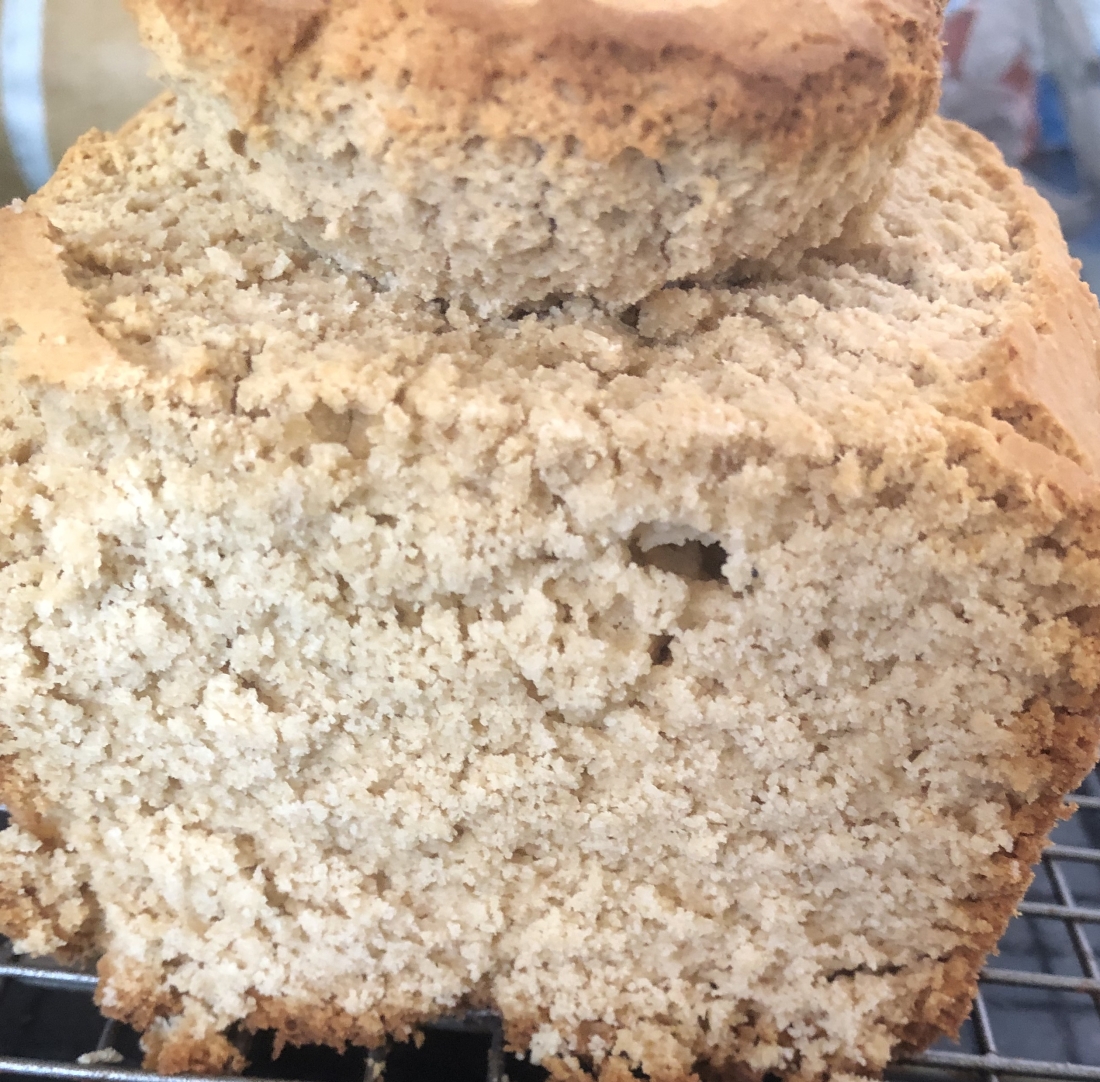
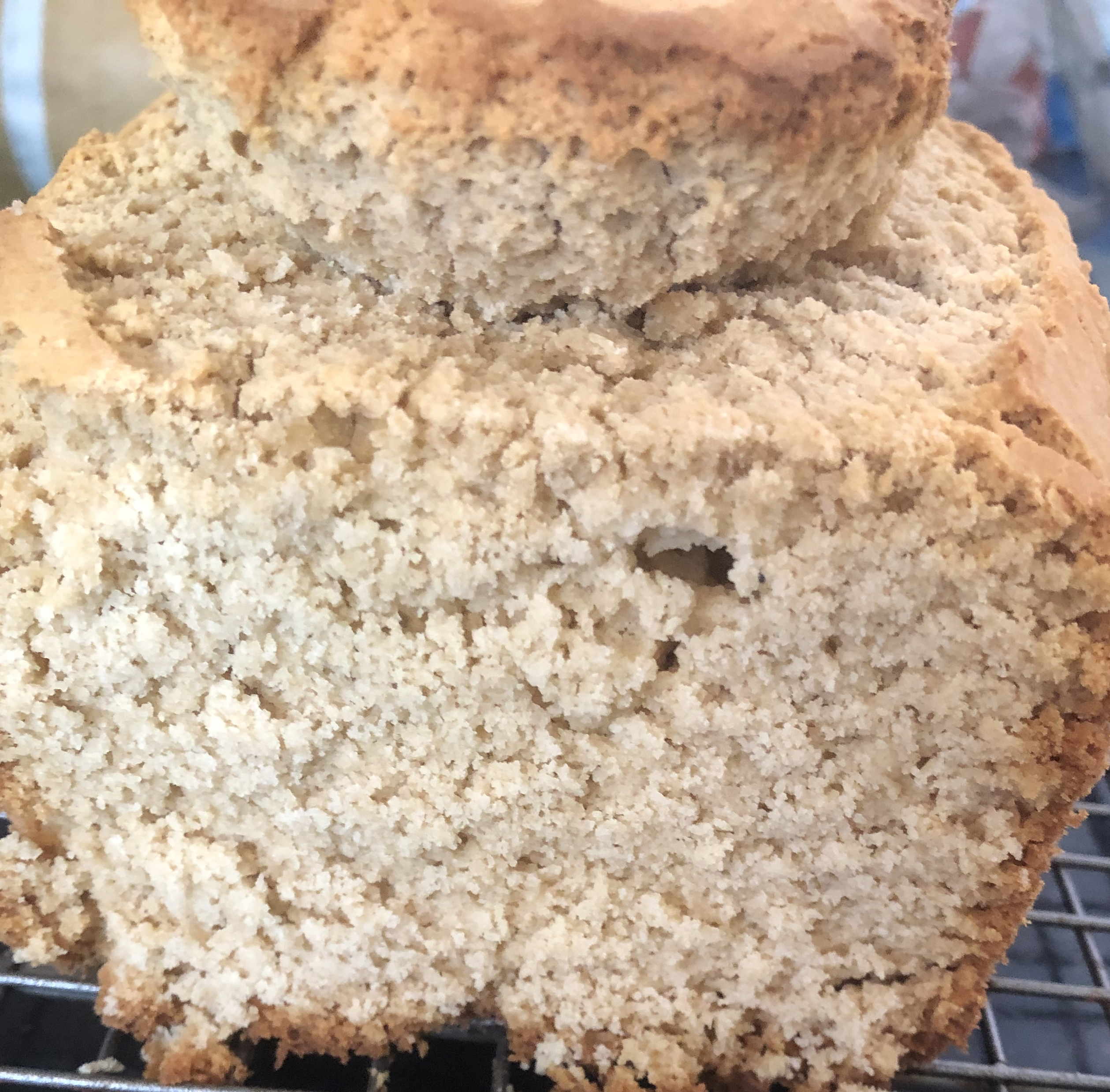
I’m always looking for different gluten free bread recipes. Most of the light, fluffy gluten free breads use eggs for that lightness. But it is possible to make gluten-free breads using baking powder instead of yeast and/or eggs.
Preheat oven to 400 degrees. Liberally grease an 8×5″ loaf pan (preferably glass for even cooking). In a medium bowl, combine:
2 cups brown rice flour
1 cup of all-purpose gluten free flour (oat, white rice, etc., would also work)
1 teaspoon baking powder
1 teaspoon baking soda
1 teaspoon guar gum or xanthan gum
1/4 teaspoon salt
Whisk or stir to combine and aerate. In a smaller bowl, combine:
2 cups non-dairy milk
3 tablespoons oil
1 tablespoon vinegar
1 tablespoon maple syrup
Whisk or stir before adding to the dry ingredients. Using a large spoon or hand mixer on low, mix until combined. Batter will be the consistency of a cake batter. Pour into the prepared pan. Place in the middle of the oven. Bake for 50-60 minutes until a toothpick comes out clean or with a few dry crumbs. Cool completely before removing from the pan.
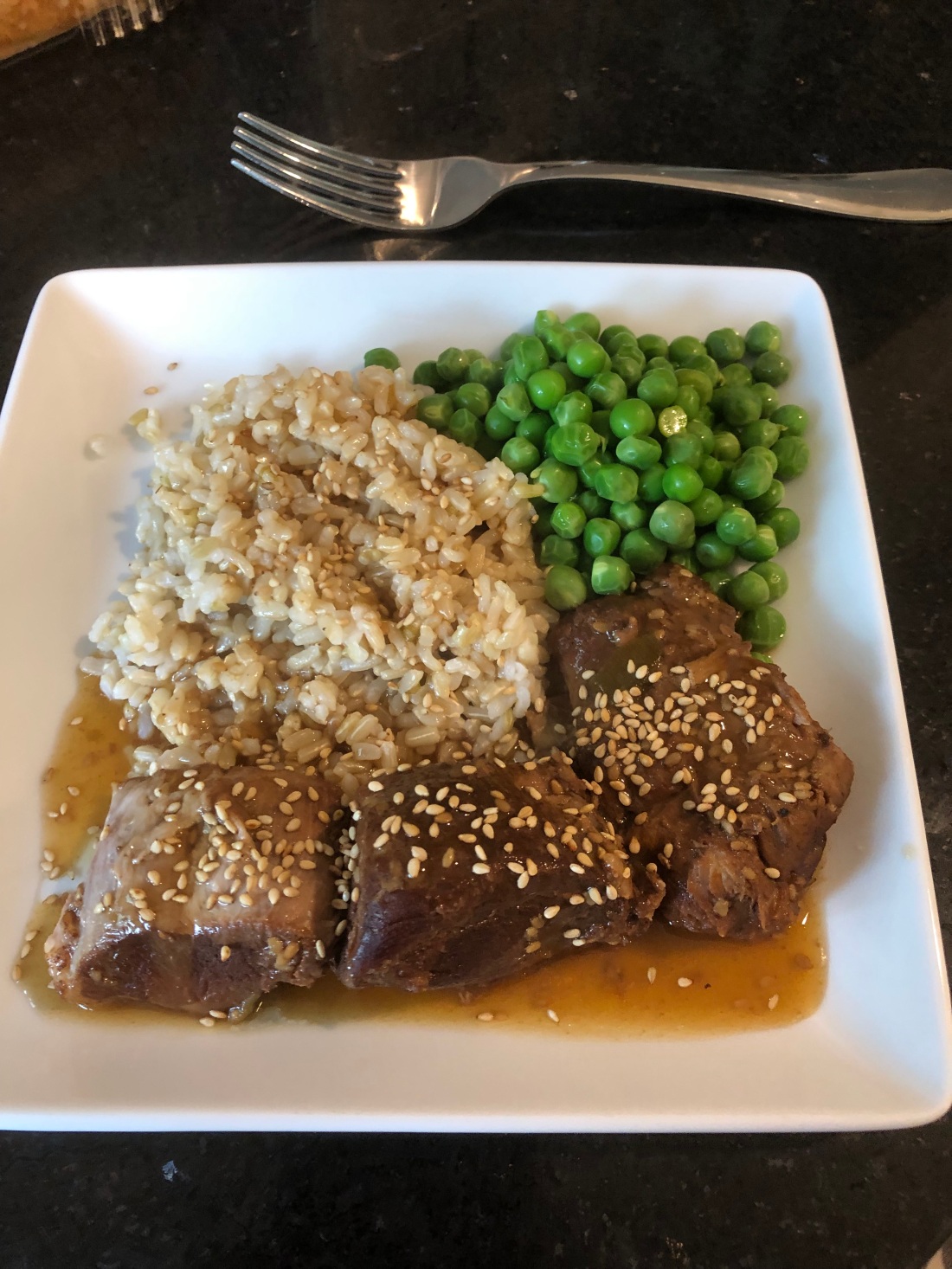
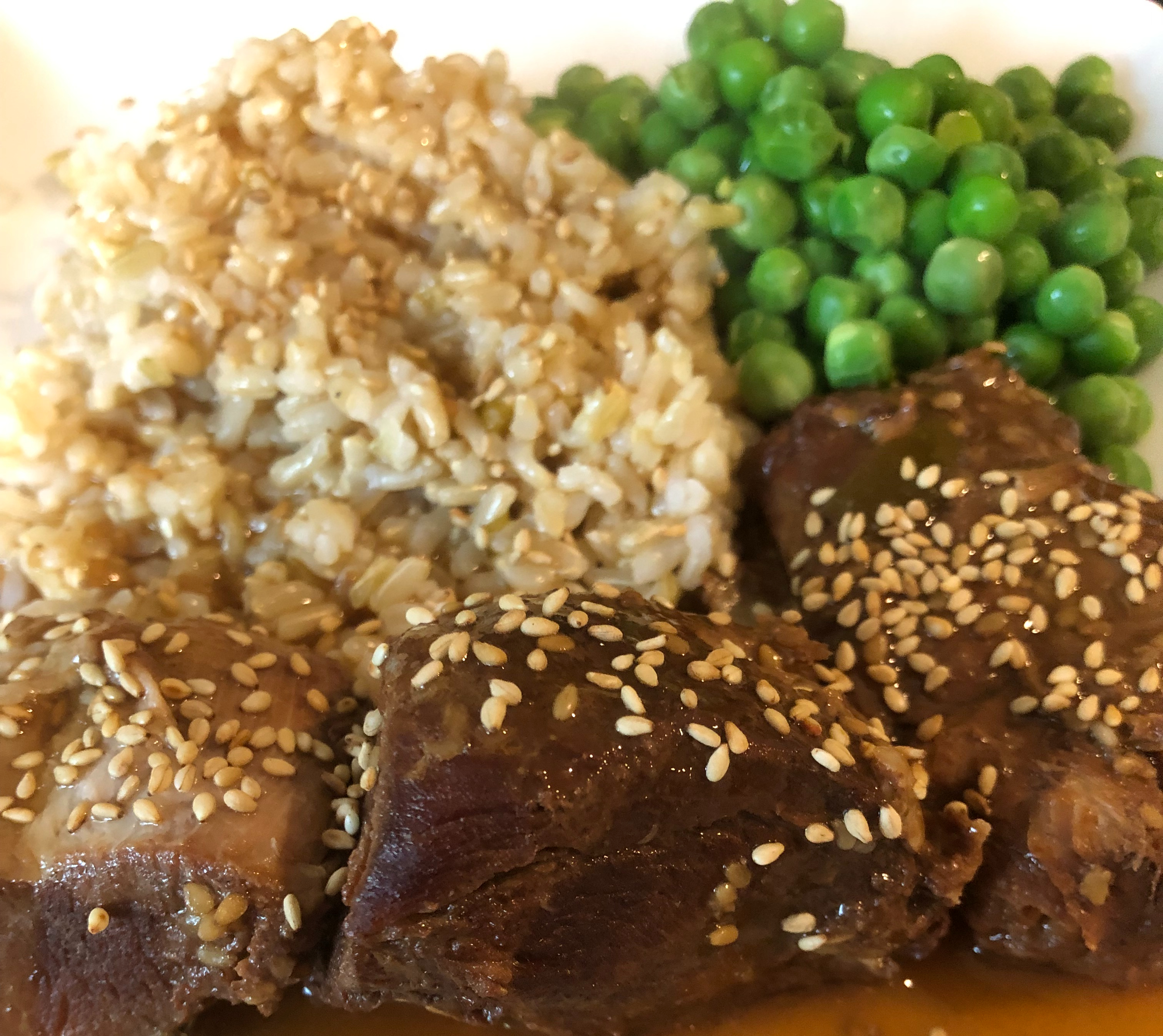
My son and I share a love for pork. Mine definitely comes from growing up on a farm where my father raised at least four pigs every year. I have fond memories of driving about twenty miles south to a butchery outside of Concord where my parents sent the hams for smoking every year. And a local grocer in Tilton would turn much of the meat that wasn’t usable as roasts or chops (or ribs) into ground pork and especially, my father’s favorite, pork sausage. I’ve tried several recipes for pulled pork but they turn out so dry and stringy. Here’s one that’s quite the opposite probably because it’s marinated overnight. Good umami flavor!
Combine in a bowl:
2 1/2 cups mushroom stock (if you can use soy, use 2 cups water and 1/2 cup soy sauce)
1/4 cup toasted sesame seeds
1/4 cup unsulfured molasses (or date syrup)
1/4 cup white or rice vinegar
2 teaspoons garlic powder
1/4 teaspoon paprika
Whisk to combine and then pour half the marinade into a large gallon food storage bag. Pour the other half into a storage container and refrigerate. Then add to the bag:
4 pounds of pork – if using a boneless roast, cut in half to make two thinner pieces and then cut each half in half; if using a bone in roast, slice into thinner pieces leaving the bone area intact
Make sure all the meat is covered by the marinade. I put the bag into a casserole dish in case of leakage and placed it in the refrigerator. Marinate overnight (I actually left mine in the fridge for two days).
When ready, drain the marinade from the bag and discard. Put the roast into an instant pot, add the reserved marinade, cover and cook for about 35 to 40 minutes. (Of course, if you prefer you can use a slow cooker on high for one hour and then on low for approximately 8 hours.)
When done, remove the meat to a serving dish. Shred, if you like, using two forks. Pour the liquid from the cooker into a fat separator and then pour the juices into a small saucepan. Combine:
2-3 tablespoons arrowroot depending on how much liquid is in the saucepan
1/4 cup water
Whisk to dissolve the arrowroot before adding the mixture to the juices in the saucepan. Bring the sauce to a boil whisking constantly until it thickens, about two minutes. Garnish the roast with:
Before I get to the recipe, I want to apologize to all my followers for the lack of posts the past several months. Mid-February was hectic with finishing packing up my apartment and then moving in with my son and his family. I finally unpacked the last of the boxes last week and feel at home once again. I’ve been collecting new recipes the past three months and will get them posted this coming week. But lets start with one of my favorite foods – chicken salad.
I eat a lot of chicken salads this time of year and I try to vary the flavors to make them more interesting. I alternate between vinaigrette and mayonnaise based salads. I’ve also changed them by doing a honey mustard vinaigrette, a creamy cole slaw dressing as well as an avocado one.
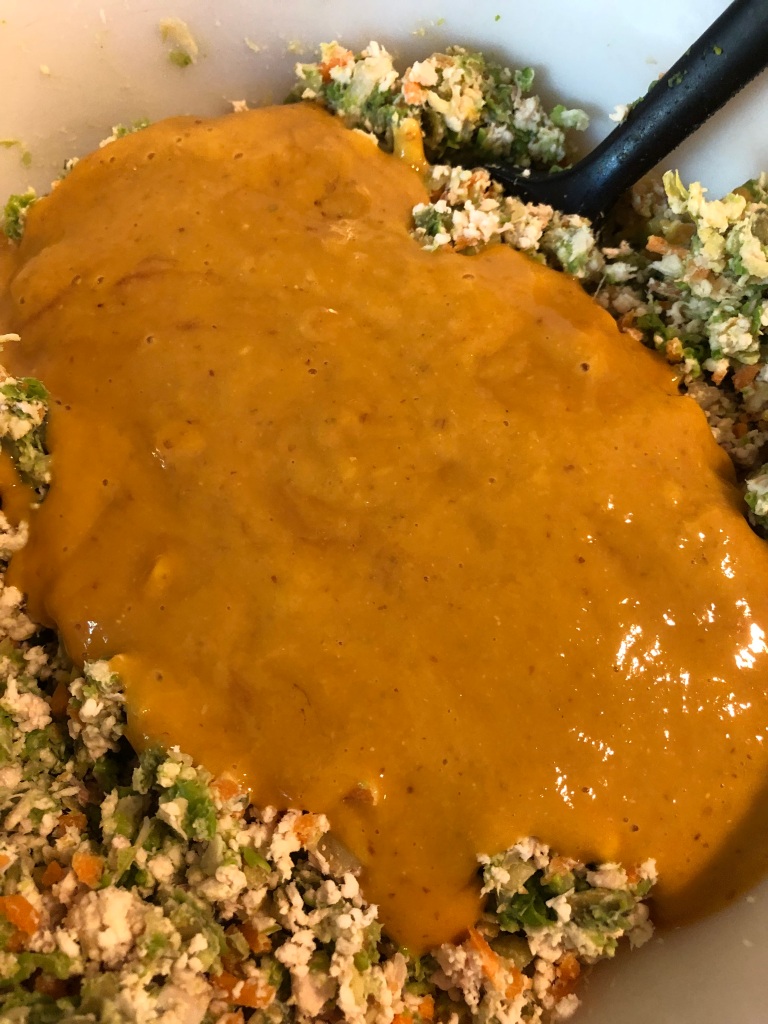
Several days ago while at my local market, I found some very ripe mangos and wondered how they might taste in my chicken salad. So I peeled and cut them up in my food processor, added the vinaigrette ingredients and tried mixing a small amount into a little chicken salad mix. Delicious!
If you haven’t tried mango, think of a peach on steroids. But be sure they are ripe or their sweetness doesn’t come through. Right now the yellow variety is in season so look for one that is completely yellow and getting soft to the touch. When ripe, the skin will pull right off once started with a knife.
Start either with the chicken or the mango dressing, either way works.
For the mango vinaigrette, in the bowl of a food processor or blender add:
2 peeled and sliced mango (not the seed of course)
1/4 cup olive or avocado oil
2 tablespoons mustard (whatever kind your family prefers)
2 tablespoons date syrup
1/4 cup rice vinegar (if using a different vinegar, probably use less since the rice is very mild)
1/2 teaspoon salt
1/4 teaspoon pepper
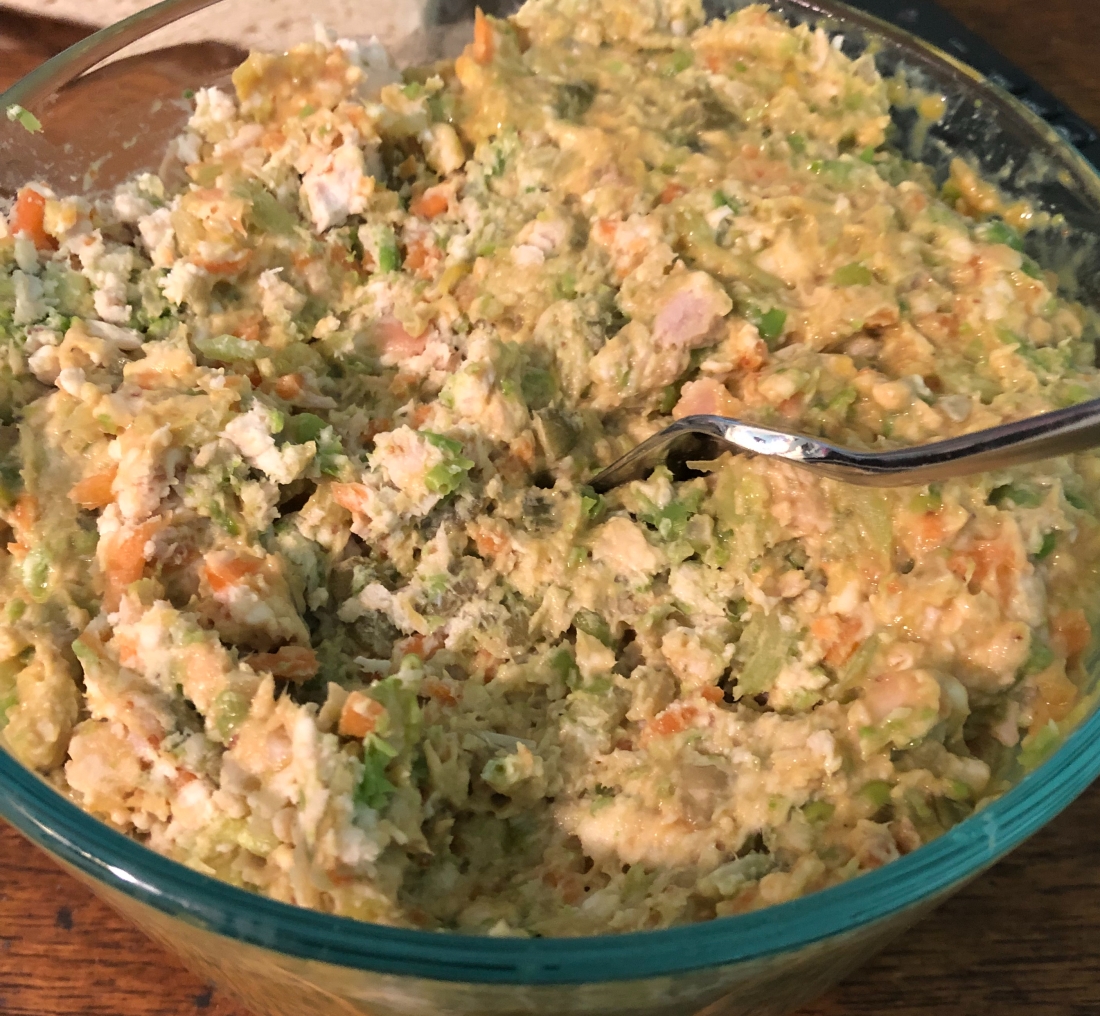
Blend until no lumps of mango remain. Makes about 1 1/2 cups of vinaigrette. That’s enough to make about five cups of chicken salad. I used a rotisserie chicken that was missing it’s wings and one thigh and leg.
About 4 cups chicken
3-4 stalks celery
1/2 cup pumpkin seeds (or another nut if you can have them)
1/2 cup shredded carrot
1/2 cup cooked peas
I like to grind the chicken, celery, pumpkin seeds and carrots in the food processor which makes a smoother salad. It’s a trick a friend who worked for a caterer taught me. Easy then to stuff it into a hollowed out tomato. It also makes a creamier sandwich.
My favorite fish is Chilian sea bass. I don’t have it often obviously because it’s also about the most expensive fish. But it was on sale this week so I had to buy some and of course, then I had to find a new way to cook it. I’d also bought some Bok choy so this recipe popped out at me when I did a search. Hope you enjoy it as much as I did. It’s pretty quick and easy, just be careful making the glaze since it should be brushable, not gloppy.
First, preheat oven to 400 degrees. Line a baking sheet with parchment paper. Next, clean:
4-6 baby Bok choy (remove ends, wash thoroughly and dry)
Place the Bok choy on the baking sheet. Heat over medium high heat in a 10″ oven-safe skillet:
1 tablespoon olive oil
When the oil is shimmering add:
2 sea bass fillets, about 6 ounces each (be sure to scale the fish, wash and dry the fillets, remove the bones if desired)
Sear in the oil for about 6-8 minutes until skin easily separates from the pan. Flip over to flesh side and place in the oven for approximately 12-15 minutes until almost cooked (flesh flakes easily when cooked). Sprinkle the Bok choy pieces with:
2 tablespoons olive oil
1/2 teaspoon sea salt
1/4 teaspoon ground black pepper
Add to the oven and roast for about 15-18 minutes. While the bass and Bok choy cook, make the glaze. In a small saucepan add:
1/2 cup soy sauce substitute
1 tablespoon rice vinegar
2 tablespoons honey (or maple, agave or date syrup)
1/2 teaspoon sea salt
1 tablespoon sesame seeds
1/2 tablespoon arrowroot mixed with 1 tablespoon water (a slurry)
Cook until just thickened. Don’t overcook! Set aside until the fish is just about cooked. Remove the fish and Bok choy from the oven. Brush each with a generous amount of the glaze and return to the oven for another 3-4 minutes. Serve immediately. Garnish with the greens from the scallions.
TIP: I had some glaze left over and the next day cooked some green beans (saute in a little olive oil until tender). When thy were cooked, I poured over the 1/4 cup of remaining gaze. Oh succulent and full of umami!
I just searched the site and can’t believe I haven’t posted a recipe for fried eggplant! It’s my grandson’s favorite so I make it quite often this time of year. It’s slightly different since it’s only floured or battered. Schnitzel has a bread crumb crust instead. It’s pretty easy to make, just be sure to salt the eggplant and let them sit awhile before proceeding. (This actually keeps the eggplant from absorbing oil when fried or sauteed as well as removing any bitterness. So this isn’t necessary when using the thinner eggplants such as Japanese or graffiti.)
Step 1 is to peel and slice the eggplant into about 1/2″ slices. Then salt them generously on both sides (I usually do this on my cooling rack over the sink), place some weight on top of them (usually use a cookie sheet with some cans on top of it) and let sit for at least a half hour.
So peel and slice:
1 large eggplant or 4-5 small graffiti eggplants
Prepare the breading station by placing in 3 separate low-sided (1-2″ high) bowls large enough to accommodate the slices of eggplant):
Bowl 1:
1/4 cup gluten-free all-purpose flour
1/4 teaspoon salt
1/8 teaspoon ground black pepper
1/4 teaspoon garlic powder
1/4 teaspoon sweet paprika
Stir to combine.
Bowl 2:
1/2 cup non-dairy milk
1 teaspoon rice vinegar
Bowl 3:
1 cup gluten-free breadcrumbs
1/4 teaspoon sea salt
1/8 teaspoon ground black pepper
1/4 teaspoon garlic powder
Again stir to combine. Breading stations are now ready for the eggplant.
Preheat oven to 425 degrees. Prepare a baking sheet by covering it with parchment paper and then spraying it with non-stick cooking spray. Remove the weights and cookie sheet and rinse off the eggplant. Dry with a paper towel. Then dip each slice of eggplant into Bowl 1 being sure to coat both sides with flour. Then dip each slice into the milk mixture in Bowl 2, letting excess milk drip off before dipping each slice into Bowl 3. Place on a cookie sheet and then sprayed with non-stick cooking spray. Bake for 20-25 minutes until golden brown and crispy. Serve immediately. Number of servings will depend on the size of the eggplant and slices. Approximately 4-6 servings.
I’m constantly looking for new ways to serve vegetables so when I came across this recipe for Yachae Jeon (Korean vegetable pancakes), I had to try it and see if it would work gluten-free. I used to eat something like these at a local Vietnamese restaurant except they called them scallion pancakes. Quite easy and quick to make with a food processor and oh so tasty especially with the dipping sauce.
First, into the bowl of food processor:
1 small to medium zucchini (about 6-7 inches long), cut into chunks
6 ounces of sliced mushrooms
1 small sweet potato (I used 2 very small purple sweet potatoes), peeled and cut into chunks
1 medium carrot, chunked (I used about 3/4 of a cup of shredded carrot)
1 jalapeno pepper (Optional), seeded and chunked
1 bunch scallions (roots removed), cleaned and cut into chunks
It may require several batches in the food processor. Process the vegetables until they are small pieces so they’ll cook quickly in the pancake.* You should have about 4-5 cups.** Next, in a large mixing bowl combine:
1 1/2 cups gluten-free all-purpose flour
1/4 cup arrowroot
2 teaspoons baking powder
1/2 teaspoon salt
1/4 teaspoon pepper
1/4 teaspoon cumin
1/2 teaspoon garlic powder
1/2 teaspoon onion powder
Stir to combine before adding:
1 1/2 cups water (room temperature)
Whisk to combine before stirring in the finely chopped vegetables. Let the mixture sit for 10-15 minutes before cooking. In a 10-12″ skillet, heat over medium heat:
1 teaspoon olive oil (or spray with cooking spray)
Using a 1/2 cup measure, scoop out pancake mixture and place in skillet, using a spoon (or the back of the measuring cup), to flatten into a round disk about 6″ in diameter. Cook over medium low heat until bubbles appear, just like a regular pancake (in my case, it was really bubble holes in the pancake that I saw). Flip and cook 3-4 minutes on the other side before increasing the heat to medium high to brown the pancake on both sides, about 1 minute per side. Place on a cooling rack in the oven to keep warm while cooking the remainder of the pancakes. Serve hot with the following dipping sauce.Makes 6-8 pancakes.
DIPPING SAUCE
Combine in a small bowl:
2 tablespoons soy sauce substitute
1 tablespoon rice vinegar
1 teaspoon date syrup (or agave syrup or honey)
1 teaspoon toasted sesame oil
1 teaspoon toasted sesame seeds
1/8 teaspoon garlic chili sauce (or your hot sauce of choice) (Optional)
*If you don’t want to use a food processor simply cut all the vegetables into thin strips like shredded carrots you buy in the supermarket or grate them on a box grater.
**These are just my suggested vegetables. Feel free to use whatever vegetables your family might like but the scallions really are the only ones required. I thought about adding a few garlic cloves as well as a crunchy vegetable like jicama or water chestnuts as well.
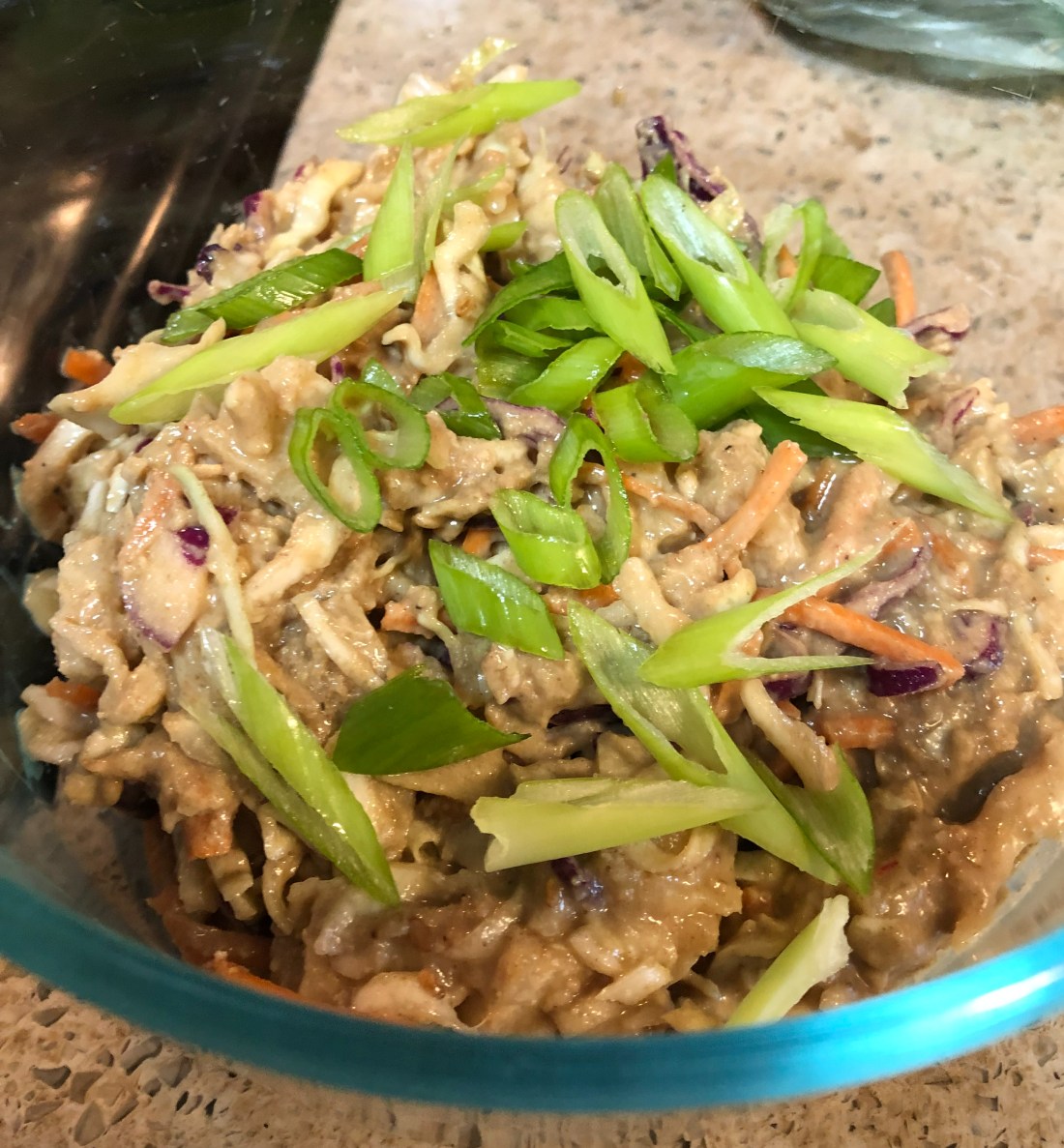
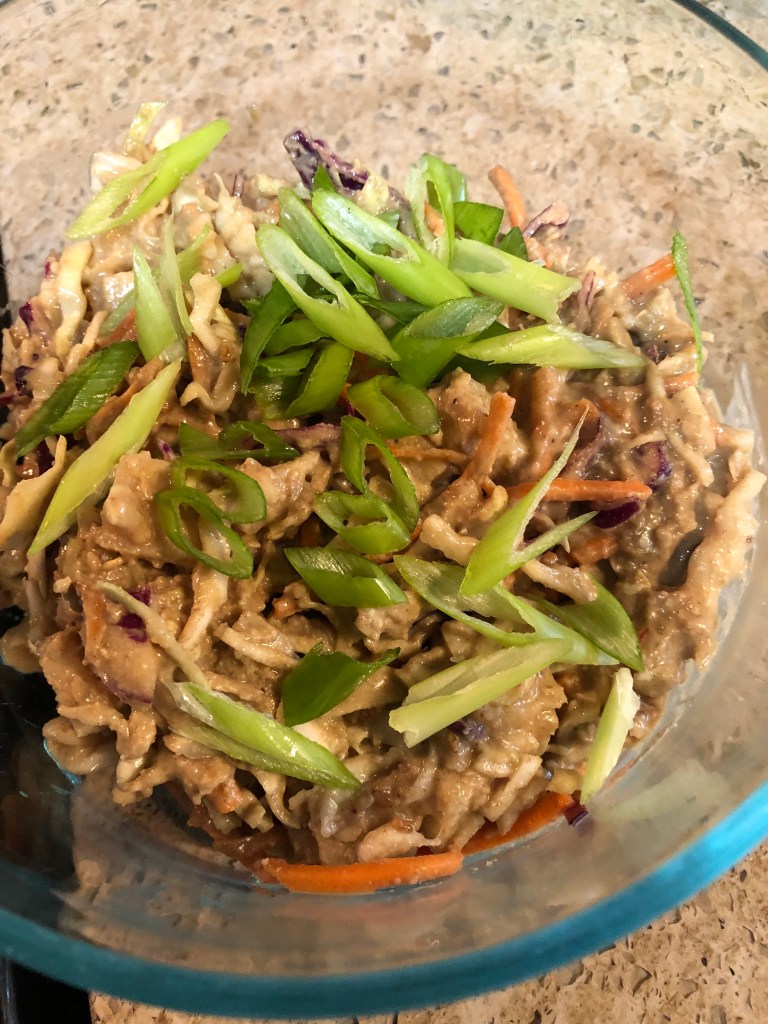
I do love a good coleslaw. I’ve put several recipes for it on my blog over the years and here’s another one that I think is up there near the top. Quick and easy to make, it tastes delicious. Of course, if you can use real soy sauce, feel free but use only half as much as the soy sauce substitute. And I know, more brown food! Can’t seem to stop making brown things.
To make the sauce whisk together:
1/3 cup rice vinegar
1/3 cup avocado oil
5 tablespoons seed or nut butter (I used pumpkin seed butter but tahini would also work well)
1/3 cup soy sauce substitute (or 3 tablespoons soy sauce) (SEE recipe under SAUCES)
3 tablespoons date sugar (or honey, agave or coconut nectar, or date syrup)
1 teaspoon garlic puree
1 tablespoon freshly grated ginger (Optional)
1 teaspoon sesame oil (toasted preferably)
1/4 cup toasted sesame seeds
Whisk until thoroughly blended and then pour over:
5 cups shaved green cabbage (or Napa cabbage, even some bok choy would work)
2 cups shaved red cabbage
1 cup shredded carrots
1 cup diced water chestnuts
1 cup diced Asian pear*
6 scallions, chopped (reserve a few of the chopped greens for garnish)
Mix thoroughly (I used a serving fork) to combine the sauce with all the ingredients. Makes 8-10 servings.
*Asian pears aren’t very sweet and are very firm. If you can’t find Asian pears, feel free to add another chopped fruit such as pineapple. Regular apple or pear won’t work very well here. Jicama would also work but not add any sweetness but you could substitute some apple juice for some of (or all of) the oil. You may want to omit the date sugar if you add pineapple or apple juice.
My husband loved chicken tenders. I think more because they’re usually deep fried than for their texture which I find generally to be stringy because they’re often overcooked. I found an adaptable recipe online so I decided to give them a try. It’s quite an easy recipe to make but I’d suggest you make the sauce first so the tenders don’t sit around after frying waiting for the sauce. Like most things that are fried, once dipped in the sauce, they will quickly lose their crunch so serve immediately after you finish preparation. Makes 2 servings.
First, put the oil on to heat. In a deep 12″ skillet heat over medium high heat:
approximately 3/4″ of oil (I used a mix of olive and avocado oil)
Next prepare the sauce. In a small saucepan, whisk together:
1/3 cup soy sauce substitute
1 tablespoon date sugar
1/2 tablespoon sriracha sauce
1 teaspoon pumpkin seed butter (or any butter you like – sunflower, peanut, tahini, etc.)
1 teaspoon grated ginger (optional)
2 tablespoons water (more may be added if the sauce gets too thick)
1-2 teaspoons arrowroot (I used 2 and the sauce got much too thick)
1 teaspoon minced garlic or garlic puree
Cook over medium heat until thickened. I had to add about 1/4 cup of water to thin mine out and I think now that I probably should have made it even thinner so that the sauce wasn’t as thick on the tenders but I didn’t mind it since the sauce is so delicious!
Next coat ONE POUND of chicken tenders. Mix together in a shallow dish:
1 cup gluten-free panko bread crumbs
1/4 teaspoon sea salt
1/8 teaspoon ground black pepper
1/4 teaspoon paprika (or if you want them really spicy, use red pepper flakes instead)
In a separate shallow dish add:
1/2 cup non-dairy milk
1 teaspoon rice vinegar
Dip each tender into the milk to coat and then into the crumb mixture. Gently place in the oil that should now be at 350 degrees (after you add the tenders if the oil is still at temperature, reduce heat from medium high to medium). Cook on the first side for approximately 3-4 minutes before turning and browning on the other side for another 2-3 minutes or until firm. Remove from fat. Be sure not to crowd the tenders in the skillet. Drain on paper towels. When all the tenders are fried, dip each one into the sauce making sure to coat evenly. Serve immediately.Garnish with fresh cilantro or green scallions.
I know, I know, more brown food. But as Anne Burrell says “Brown foot GOOD!”
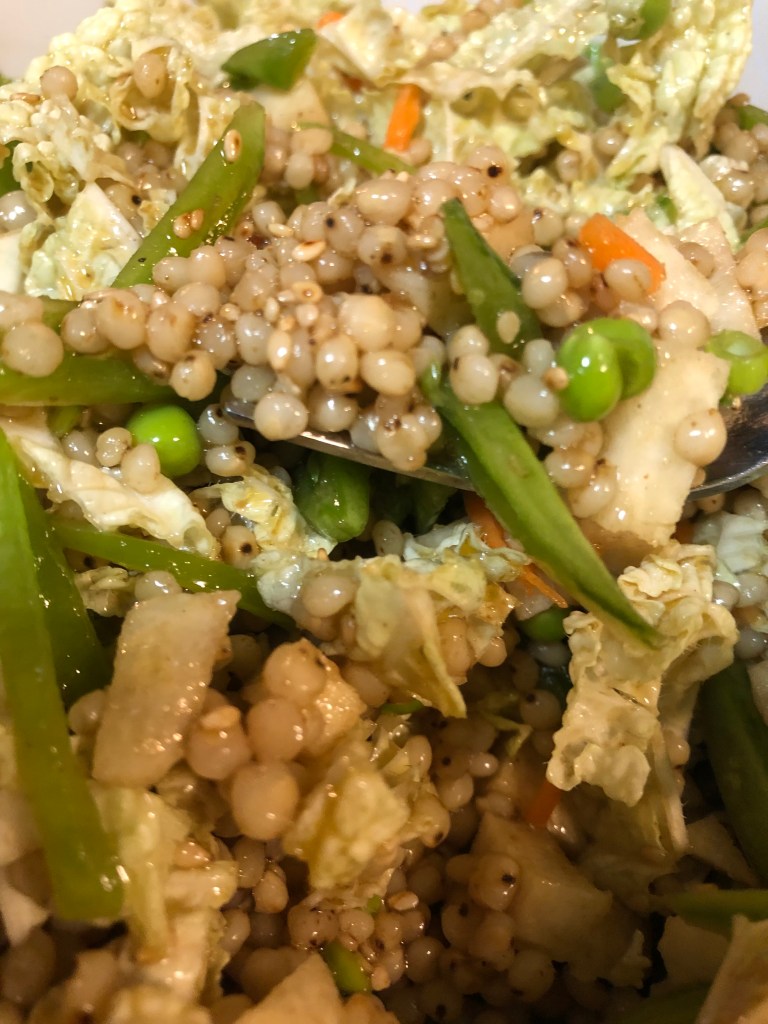
There are so many great grains out there for those of us who can’t digest gluten or potatoes. Here’s one that takes a little longer to make, only because sorghum takes such a long time to cook but is really delicious and quite different from any other grain. As usual, feel free to use variations listed below if a non-Asian type of salad is desired. Enjoy something other than pasta or potatoes!
Cook in 2 quarts of boiling water:
1 cup washed sorghum*
1 teaspoon sea salt
Once water boils, reduce heat to medium high and boil uncovered for 50-60 minutes or until sorghum is soft. Rinse under cold water.
While the sorghum is boiling, prepare:
1/2 to 3/4 cup shredded carrots
2 cups shredded Chinese cabbage
1 cup diced jicama (or diced water chestnuts)
1 cup stringed and sliced pea pods
Combine in a large bowl. Then make the dressing. Pour into a 2-cup jar:
1/4 cup soy sauce substitute (see recipe under sauces/condiments/dressings)
1/2 cup olive oil
1/4 cup sesame seeds
2 teaspoons toasted sesame oil
2 tablespoons rice vinegar
1 teaspoon fish sauce (Optional)
2 tablespoon date syrup
1/2 teaspoon chili paste (or wasabi paste)
1 teaspoon finely minced garlic or ginger (Optional)
Shake vigorously to emulsify although the oil will separate if not used immediately so it will need to be repeated prior to use. Once the sorghum is cooked, rinsed and cooled, pour into the bowl of vegetables and add the dressing. Toss to combine and serve.
*Sorghum has a waxy outer shell that needs to be rinsed off before cooking.
VARIATIONS:
Italian Sorghum salad: Use diced tomatoes, cucumbers, parsley or basil, carrots, peas, etc., with an Italian style dressing.
Sorghum “Potato-style” salad: Add some diced onion, celery, hard-boiled eggs, and a mayonnaise dressing.
Indian Sorghum salad: Use chickpeas, broccoli, carrot, cucumber, spinach, or zucchini along with a curry or tahini-based dressing.
Most cole slaws are pretty easy to make especially if you buy a pre-sliced bag of cole slaw mix which usually includes green and red cabbage along with shredded carrots. I’m always looking for new types of cole slaw and a cooking show I watched recently added kohlrabi to it and I remembered the kohlrabi from my childhood. My sister, brothers, and I would be weeding the garden and see the kohlrabi bulbs, cut them off, and eat them like apples. So delicious! And my mother would be so angry with us because she’d planned on cooking them for supper.
This reminds me of that because they’re raw. If you don’t like kohlrabi or can’t find it in your supermarket, jicama would work just as well. Some thin slices of apple or pear would be great in this as well.
Combine in a large bowl:
1 1/2 cups thinly sliced kohlrabi
1 cup shredded carrots
1 1/2 cups thinly sliced red cabbage (I sliced it thin and then cut the slices in half)
1 1/2 cups thinly sliced white cabbage (I used Chinese but any white or green cabbage works)
In a glass jar combine:
1/2 cup olive oil
1/4 cup rice vinegar (white or apple cider would also work)
2 tablespoons honey
1 teaspoon celery seeds
1 tablespoon sriracha (optional)
Put the lid on the jar and shake vigorously for about a minute or until emulsified. Pour over the vegetables and stir to mix the vegetables and dressing (I used tongs for this). Serve chilled.Makes 6 servings.







 cookingwithoutallergens