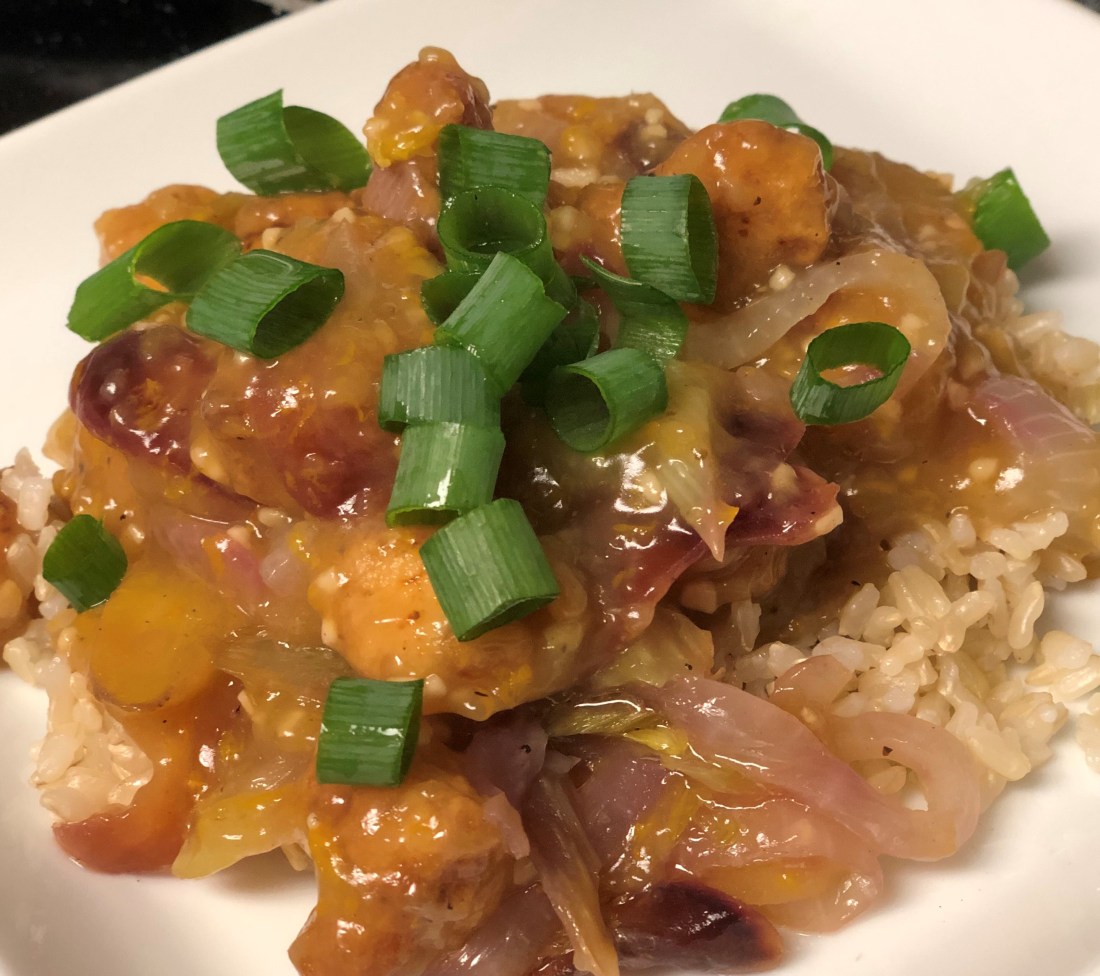
Orange Chicken (dairy free, gluten free, soy free, egg free, sugar free)

I love Chinese food but since I’m allergic to soy I don’t get it very often. There’s a small Chinese restaurant in central New Hampshire that I visited frequently when I was there last year where they were willing to cook meals for me without any soybean oil or soy sauce. My selection was, of course, limited due to my other allergies but it made me hungry for more.

I recently found a recipe for Orange Chicken and decided I could adapt it if only I could find a substitute for soy sauce, such a staple in Chinese food. So, for those of you who can’t use soy, like me, I’ve got an alternative here for that as well. The recipe is a little complex but if you follow it step by step, its easy enough to make a great dish.

The soy substitute works well in this recipe and I’ll probably try it out on different dishes in the future. Make it ahead. It will freeze which is nice since most recipes call for only a little soy sauce at a time.

In a small saucepan mix:

1 1/2 cups bone broth – I used mushroom but beef would also work

3 teaspoons vinegar

1 tablespoon unsulfured molasses

2 teaspoons date sugar (or date syrup)

1/4 teaspoon garlic powder

1/4 teaspoon salt

1/8 teaspoon black pepper

1/8 teaspoon ground ginger

1 teaspoon sesame oil

Bring to a boil and simmer until reduced by half. Cool.

For the orange chicken, to serve four:

3/4 chicken broth

Zest and juice of 2 oranges

1/4 teaspoon monk fruit powder

6 tablespoons rice vinegar

1/4 cup soy sauce substitute

2 teaspoons diced garlic

1 tablespoon grated fresh ginger

1/8 teaspoon ground chipotle (use more if you like it hot)

1 1/2 pounds boneless, skinless chicken breasts or thighs, cut into 1 inch pieces

5 teaspoons corn starch (if like me, you have trouble with too much corn, you can use arrowroot, tapioca or cassava here as well) mixed into 2 tablespoons water to make slurry

1 cup arrowroot, tapioca, or cassava flour

1 tablespoon aguafava powder mixed into 1/2 cool water (or you can use 3 egg whites)*

1/4 teaspoon cream of tartar

1/2 teaspoon baking soda

3 cups olive oil (or any oil you can use)

First, whisk the broth, grated orange zest and juice, the monk fruit powder, vinegar, soy sauce substitute, garlic, ginger, and chipotle in a large saucepan until thoroughly mixed. Transfer 3/4 of the mixture to a large zip-lock bag, add chicken, and toss to coat. Get the air out of the bag by sealing it most of the way and then pressing the bag. Finish sealing bag and refrigerate for at least l hour.

While the chicken marinates, bring to a boil the rest of the sauce. When it comes to a boil, whisk the slurry into the sauce and continue whisking until the sauce is clear and thick. Set aside.

In a large Dutch oven heat the oil to 350 degrees.

Beat the aguafava (or egg whites) until soft peaks, add cream of tartar.

Combine the arrowroot with the baking soda, salt and pepper in a large zip-lock bag.

Set up 2 baking sheets with parchment paper or paper towels on the bottom of the tray and put a cooling rack on top of the paper in one of the baking sheets. Drain the chicken and pat dry with paper towels. In parts, don’t try to do all the chicken at once, coat it with the beaten aguafava (or egg whites), then toss into the bag of flour and shake to coat. Remove chicken from the bag shaking off any excess flour. Place the chicken on the baking sheet without the rack.

Add the floured chicken one piece at a time to the oil and fry until golden brown 3-5 minutes, turning chicken as needed. You should be able to fry 1/3 to 1/2 of the chicken at a time. Transfer to the wire rack. Be sure to bring the oil back to 350 degrees between each batch of chicken.

Reheat sauce until simmering. Add chicken and serve immediately over rice. Some cut scallions add to the dish. You can also add to the sauce some sautéed onion and celery, water chestnuts, broccoli, bok choy, etc.

*You can buy aquafaba powder online. If you don’t have any simply use 1/2 cup aquafaba liquid.

Honey Mustard Pork Chops (Dairy-free, gluten-free, sugar-free)

My mother used to make pork chops covered with onion-soup mix and cream of mushroom soup.  I loved those pork chops and have been trying for years to find a recipe that I could eat that would produce such juicy, succulent pork chops.  And I think I’ve finally found one!  This recipe adds some spice (I like to use spicy brown mustard) along with a slight sweetness to a juicy chop.  I serve it with some of my celery root and parsnip mash that’s been reheated in a skilled until crispy brown.

This recipe is for 2 chops but can easily be doubled or tripled depending on how many chops are needed.

In a small bowl mix:

  • 1/4 cup spicy brown mustard
  •  2 tablespoons honey (I like to use raw organic honey)
  •  2 tablespoons olive oil

Grease a 6×9″ baking dish.  Trim excess fat from the pork chops.  Add the chops and spread with half the honey mustard mixture.  Turn over the chops and spread with the remaining mixture.  Marinate at least a half hour but I’ve left them as long as overnight.  The vinegar in the mustard will tenderize the pork so the longer you let them marinate the better.

Preheat oven to 400 degrees.  Bake the chops for 10-15 minutes depending on the size of your pork chops and then remove and turn the chops over.  Be sure to test with your finger or a spoon to determine if the chops are cooked (a done chop with have no give when pushed with a spoon or finger).  If my chops are almost done after turning over, I put them under the broiler to brown the top for 3-5 minutes.    A 1-bone chop takes roughly 20 minutes total.  Let sit for 5-10 minutes to rest before serving.

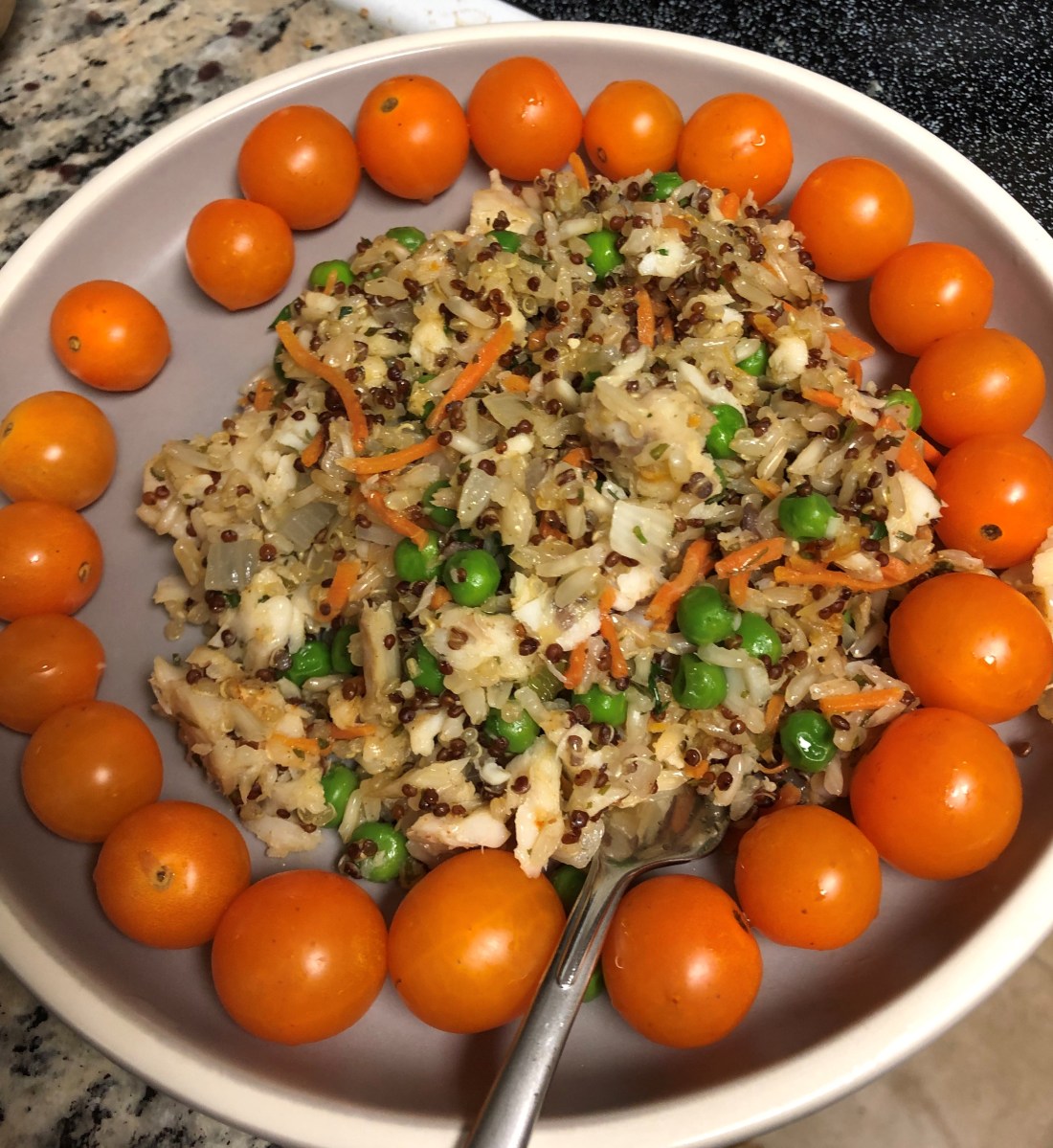
Fish and Rice Stirfry (Dairy-free, Soy-free, Gluten-free)

I’m always looking for new ways to use fish.  Fish is one of those proteins that I love to eat but don’t often like to cook.  This is a quick recipe that really highlights flavor.  Its well balanced nutritionally, very filling, and can be adjusted to serve the tastes of anyone.

You’ll need:

  • 1 cup cooked brown rice
  • 1 cup cooked quinoa
  •  6-8 ounces white fish, diced
  •  1/2 cup diced onion
  •  1/2 cup shredded carrots
  •  1/2 cup cooked peas
  •  1/2 cup diced celery
  •  1/2 teaspoon dried thyme
  •  1 tablespoon dried parsley (or 3 tablespoons fresh parsley)
  •  Scallions, cherry tomatoes, etc. for garnish
  •  2 tablespoons olive oil
  •  Salt and pepper to taste
  •  Juice of a half lemon

In a large hot skillet, add the olive oil, onions, carrots, and celery.  Saute over medium heat until celery and carrots are softened.  Add the fish and cook thoroughly.  Add the rice, quinoa, peas, and herbs.*  Stir to combine.  Heat through, spritz with the lemon juice and serve with whatever garnishes you like.  This time of year, my first garnish is always tomatoes although this year, without my husband’s garden, I’ve had to find fresh tomatoes in the markets.

*Other additions, depending on your tastes, could be some diced peppers, sweet or hot; some hot sauce or chili oil; Old Bay seasoning or other herbs; and perhaps, since I’m now living in Minnesota instead of New Hampshire where this seems to be like seafood back east, some wild rice instead of the brown rice and/or quinoa.

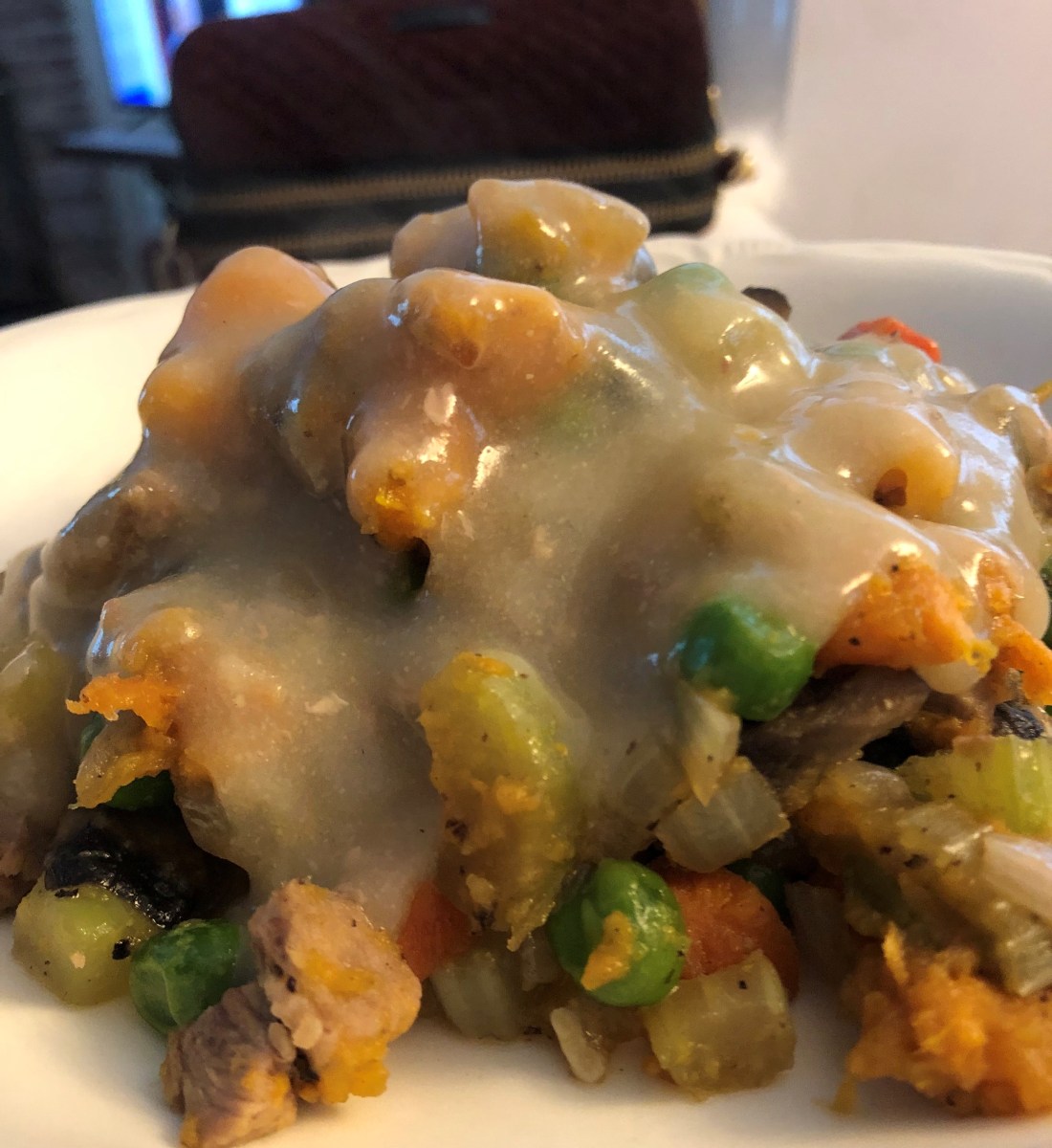
Hash (dairy-free, gluten-free)

Anytime we had left over meat of any kind, my mother or I made hash from it.  My favorite is probably ham while my mother really liked red flannel hash made with corned beef.  It can be served with gravy, ketchup, horseradish sauce, or even plain with a poached or fried egg on top.  The vegetables added can also vary depending on taste and what’s in the frig or freezer.  I like to use sweet potato but again, any potato will work just fine.  It could also be made with just vegetables for a vegan hash.  In my eyes, any way one makes a hash is delicious with the crispy potato, tender meat and tasty vegetables.  The English version of Chinese stir fry!

You’ll need:

  • 1 tablespoon oil
  • 1/2 diced onion
  • 1/2 diced celery
  • 1 cup diced and cooked potato
  • 2 cups diced and cooked meat (beef, pork, chicken, turkey, ham, tofu, etc.)
  • 1/2 cup cooked peas
  • 1/2 cup cooked carrots

In a large skillet, heat the oil and cook the onion and celery until softened.  Add the potato and cook until potatoes are browned.  Add the meat and vegetables and stir well.  Cook until heated through.  Add salt, pepper, and herbs to taste.  I used my salt-free mixed herbs.  Top with gravy, ketchup, etc. or serve plain.  My mother always fried eggs to go on top of her hashes but for those of us allergic to eggs, that’s not an option.

Braised Cabbage (dairy-free, gluten-free)

My mother loved braised cabbage; this was her go-to winter vegetable when she was tired of peas, carrots, green beans or corn.  She always used red cabbage but any cabbage will work.  The onion adds a little tang and the bacon a smoky flavor.  I add pear; my mother always used apple.  Either will add some sweetness to the dish and, when combined with the fat from the olive oil and bacon, give it a full-bodied richness.  Prepare the onion, bacon, and cabbage ahead of time and this takes around 15 minutes to cook.  And it can be a vegan dish if you leave out the bacon.  Makes 4 servings using a 3-4 inch cabbage.

In a large saute pan, add:

  • 1 tablespoon olive oil
  • 1/2 to 3/4 cup chopped uncooked bacon (whatever bacon your family likes works fine) — IF your bacon is very fatty, don’t use the olive oil

Cook until bacon is browned.  If you have more than a couple of tablespoons of fat in the pan, drain some off. Add to the pan:

  • 1 cup chopped onion

Cook until onion is softened.  Add:

  • 4-5 cups chopped cabbage
  • 1/4 cup vinegar (any vinegar works but if white is used, a little less vinegar would probably be good unless your family really loves the taste of vinegar)

Cover and braise 5-7 minutes until cabbage is softened, stir once or twice during cooking.

Add 1 diced apple or pear and cook another minute or two until fruit is soft (the apple may take a few minutes more than the pear).  Drizzle with 1 tablespoon of maple syrup.  Add salt and pepper to taste, stir well, and serve.

You can also add 1 tablespoon caraway seeds.

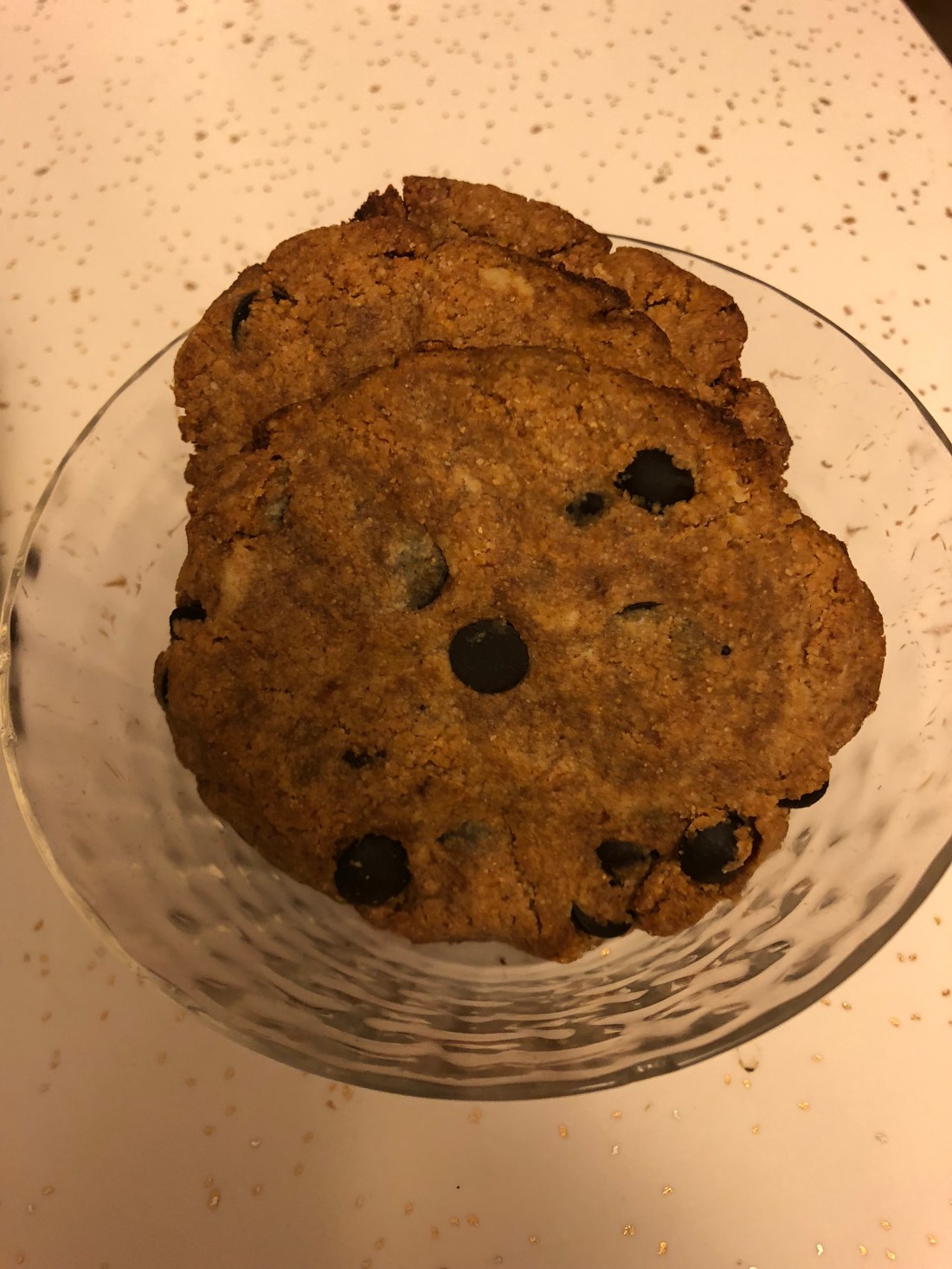
Tahini Carob Chip Cookies (dairy-free, gluten-free, refined cane sugar-free, egg free, vegan)

Remember those chewy, nutty peanut butter cookies from our younger days? These are very reminiscent of those but are healthy and so easy with just five ingredients. Feel free to substitute any nut or seed butter you can use such as sunflower or pepitas.

Preheat oven to 350 degrees. Line a cookie sheet with parchment paper.

Put in your food processor:

  • 1 cup tahini (or any nut or seed butter), use a thicker tahini rather than a runny thin one or your cookies will not come out chewy
  • 1 cup date sugar
  • 4 tablespoons of aguafava (or 1 egg if you can use eggs)
  • 1 teaspoon of vanilla

Process until smooth and then remove from food processor into medium bowl and stir in 1/2 to 1 cup of unsweetened carob or chocolate chips. Scoop by tablespoon onto prepared cookie sheet, flatten with damp fork (or spatula) and bake for 10-15 minutes depending on the size of your cookies. You want them crispy on the outside but chewy in the middle so when the middle is set and the outside browned, they are done. Makes 10-15 cookies.

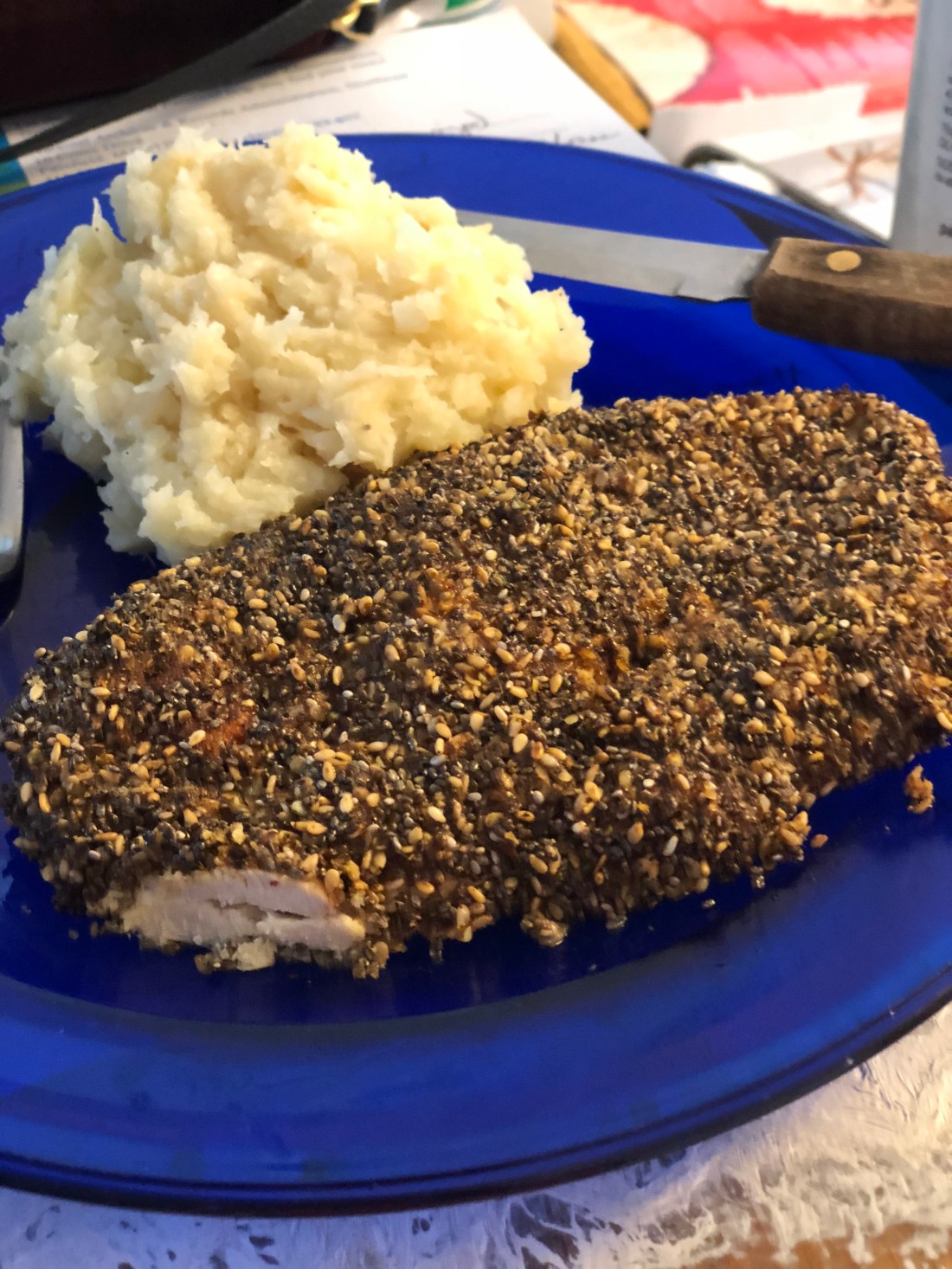
Baked Chicken Breasts (dairy-free, gluten-free)

I eat a lot of chicken since I’m allergic to anything that comes from a cow as well as most other red meats.  So I’m always trying out new chicken recipes and this is an old recipe I found while digging around for blog posts in my old cookbooks and files.  It originally used almond flour and nut butter but I’ve updated it and removed those ingredients and added several healthier options.  It can be served with some cranberry sauce (see Cranberry Compote).  Be careful with the baking times — its a very moist breast due to the marinade but will dry out around the edges if cooked too long.  Its difficult to tell when its cooked just by looking at this chicken; take it out of the oven and check it for firmness to be sure its cooked.  Depending on how thin the breasts are pounded will vary the cooking time.  Mine were around a 1/2 inch and I cooked them 35 minutes which turned out to be about 5 minutes too long since they were a little dry around the edges.

This recipe serves 4 using two whole (versus half) chicken breasts.  Place a breast in a gallon storage bag.  With either a rolling pin or a meat tenderizer (flat edged), pound out breast until its about a half inch thick.  Repeat for the second breast.

Spray a shallow 10″ baking dish with non-stick cooking spray.  Add the flattened breasts.  In a small bowl mix:

  • 1 tablespoon olive oil
  • 1 tablespoon tahini
  • juice from one lime
  • 1 teaspoon salt
  • 1/2 teaspoon ground pepper
  • 1 teaspoon dry parsley
  • 1 teaspoon onion powder
  • 1/2 teaspoon garlic powder
  • 1/2 teaspoon paprika

Pour over chicken breasts.  Turn over the breasts several times to be sure that all parts of the breasts have some marinade on them.  Cover with plastic wrap and marinade for a minimum of 1 hour or overnight.

When ready to bake, preheat oven to 350 degrees.  In a second shallow dish (like a large pie plate), combine:

  • 1/4 cup ground flax/hemp mix
  • 1/4 cup chia seeds
  • 1/4 cup toasted sesame seeds
  • 1/4 teaspoon salt 
  • 1/4 teaspoon pepper
  • 1/4 teaspoon onion powder
  • 1/4 teaspoon dry parsley
  • 1/8 teaspoon paprika
  • 1/8 teaspoon garlic powder

Stir to combine.  Press a chicken breast into the mixture to cover.  Turn it over to coat the other side and don’t forget the edges.  Repeat with the second breast.  Place in a greased baking dish and bake for 25-30 minutes depending on thickness (for 1/2 inch breasts; for thicker breasts increase slightly).  Serve plain or with cranberry sauce.  I paired mine with the celery root and parsnip mash (see Side Dishes) which is now one of my favorite sides — can’t tell you the last time I ate a potato!

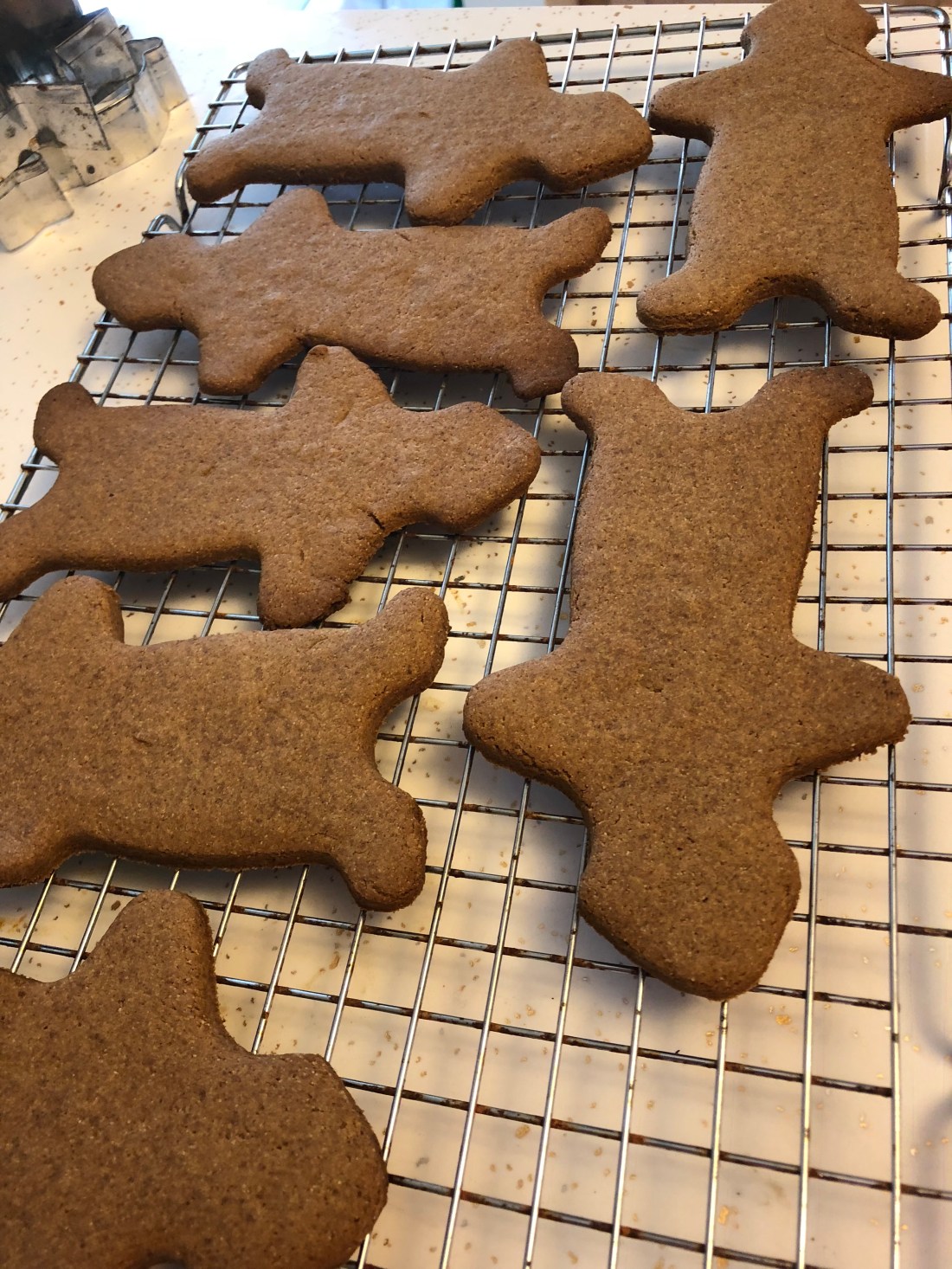
Gingerbread Cookies (dairy-free, gluten-free, egg-free, refined sugar-free, vegan)

What’s better at the holidays than sugar cookies or gingerbread cookies?  Just the smell of gingerbread baking makes most of us think of Christmas.  This recipe uses a number of types of flours to get the right consistency for gingerbread but is fairly easy to put together.  I added a 1/2 teaspoon of fresh grated ginger but it could have used substantially more so if you really like ginger, add 1-2 teaspoons of freshly grated ginger.  And, depending on how thin you roll these, vary the baking times from 10-12 minutes for thinner cookies and  15-20 minutes for thicker cookies.  And the number it makes also depends on how thin you roll them; it can make as few as 15 for thicker cookies or as many as 24 for thinner cookies.

I’m working on a sugar-free and egg-free royal icing and hope to have that recipe ready for the blog soon.  

In a medium sized bowl combine:

  • 1 cup millet flour
  • 1 cup tapioca starch/flour
  • 1/2 cup arrowroot
  • 1/2 cup sweet sorghum flour
  • 2 teaspoons ground cinnamon
  • 1 teaspoon ground ginger (more if you like them really gingery)
  • 1 teaspoon xanthan gum
  • 1 teaspoon sea salt

Sift or stir to combine dry ingredients.  In a large bowl mix:

  • 1 cup shortening such as Spectrum
  • 1/2 cup date sugar
  • 1 teaspoon monk fruit powder

Beat on medium speed until well mixed.  Add:

  • 1/2 cup agave nectar (or coconut nectar or honey)
  • 1/4 cup unsulfured molasses
  • 1/4 cup water
  • 2 teaspoons vanilla extract
  • 1/2 to 2 teaspoons freshly grated ginger

Mix on medium speed until combined.  Add dry ingredients in several batches (around 3/4 cup at a time) until all the flour is incorporated.  I actually put down the mixer when half the dry ingredients were added and mixed in the remainder with a large spoon.  Form into a round disk (or a rectangle) and wrap in plastic wrap.  Refrigerate for 1/2 to 1 hour.

Preheat oven to 350 degrees.  Line baking sheets with parchment paper (no non-stick spray needed).  Unwrap the plastic wrap and add a piece of parchment paper to the top.  Roll out to 1/8 to 1/4 inch depending on taste.  I prefer a very thin, crispy cookie so I rolled mine out rather thin.  Repeat until all the dough is used.  These cookies will not rise or expand while baking so they can be placed on the cookie sheets closely packed.  Decorate with unsweetened carob or chocolate chips if desired before baking.  

Bake 10-20 minutes depending on thickness; when the cookies are slightly firm and browned (hard to tell with the molasses), they are cooked; if you like yours crunchier, cook them a little longer.   Cool on cooling racks.  These can be frosted with carob buttercream or cream cheese frosting if desired (I enjoyed mine just plain).

Yule Log (dairy-free, gluten-free, egg-free, sugar-free, vegan)

One of my favorite desserts when I was younger was a rolled cake. That’s all a Yule Log is — a rolled cake that’s made to look like a tree log.  I remember when I first made them in the 1960s, we used almonds to make the bark; today, one just uses a fork or toothpick to make the frosting look like bark, much easier than lining up all those almonds slices!  I struggled a long time to develop a recipe for a sponge cake that doesn’t use any eggs but I finally came up with this one.  It makes a small roll so if you want something bigger, make the recipe twice (I don’t recommend doubling it, instead just make 2 batches).  This will serve 8 normal people (in my family my two brothers would have demolished it all by themselves!).  

Preheat oven to 400 degree.  Grease a small cookie sheet with sides.  Place a piece of parchment paper on top and grease the paper.

In a large mixing bowl add:

  • 3/4 cup aquafaba
  • 1 teaspoon cream of tartar

Beat on medium speed until peaks start to form and then increase speed to high.  Add, a few tablespoons at a time:

  • 2/3 cup date sugar
  • 1 teaspoon vanilla extract

When the sugar is completely combined, fold in by hand:

  • 1/2 cup all purpose gluten-free flour
  • 1/4 cup arrowroot or tapioca flour

Again, add the flour slowly, a few tablespoons at a time.  Fold in gently just until combined.  If your merengue falls, add 1 teaspoon baking powder to the mixture. [You can go ahead and use it but it will make a tougher sponge.] Spread in the prepared pan – makes about a 6″x8″ cake.

Obviously, if you’re doubling the recipe, you’ll want to use a larger pan and it will spread to approximately 12″x16″.  Bake 10 minutes in preheated oven.  When done, turn out onto a CLEAN dish towel (doesn’t matter what fabric towel it is as long as it isn’t too thick and its clean).  Let sit for about 1 minute and then roll long side to long side including the towel.  Let cool completely before filling and frosting.

I used the Carob Buttercream frosting but any brown frosting would work including a Nut butter and cream cheese (or tahini and cream cheese) frosting.  

Triple Carob Glazed Donuts (dairy-free, gluten-free, egg-free, refined sugar-free, vegan)

Sometimes you just want something “good” for breakfast instead of the usual smoothie.  This is one of my go-to recipes when that happens to me.  This is not a very sweet donut so if you like your donuts sweeter, just increase the amount of monk fruit powder in the recipe.  But I find that the glaze gives it all the sweetness it needs. This recipe makes six donuts.

Preheat oven to 375 degrees.  Grease a donut pan (be sure to grease the center as well so your donuts don’t stick in the middle.

In a medium bowl combine:

  • 1 cup all purpose gluten-free flour
  • 1/4 cup tapioca (or arrowroot) flour
  • 1/4 cup sweet sorghum flour
  • 1 teaspoon xanthan gum
  • 3 teaspoons baking powder
  • 1/4 cup carob (or cocoa) powder
  • 1/4 teaspoon salt
  • 1 teaspoon monk fruit powder
  • 1/4 to 1/2 cup unsweetened carob (or chocolate) chips

In a second small bowl combine:

  • 1/2 cup non-dairy milk of choice
  • 2 tablespoons olive or avocado oil
  • 2 tablespoons rice vinegar
  • 1/2 cup club soda
  • 1 tablespoon vanilla extract

Add the wet ingredients to the dry and mix by hand until combined (be sure to scrap the bottom of the bowl so that you get all the dry ingredients mixed in; I only say this because I frequently find when I scoop out the dough into the gallon zip bag that there’s dry on the bottom of the bowl).  Scoop the dough into a gallon ziplock bag.  Cut off a bottom corner and pipe into the prepared donut pan.  Bake at 375 degrees for 10-12 minutes.  Try to make all the donuts the same size so that they all cook at the same rate.

Remove the donuts from the oven and let sit on the counter for a couple of minutes while you prepare the ganache (see recipe under Sauces…).  Loosen the donuts from the pan and turn onto a cooling rack.  Dip each donut into the ganache to coat the tops.  

TIP:  You’ll probably have some ganache left over — make some truffles letting the ganache firm up in the refrigerator and then roll (about a tablespoon or two) into a ball and then roll in ground nuts, flax and chia seeds, hemp hulls, coconut, or carob powder.