String Beans with Garlic Sauce

I used to love vegetables with garlic sauce. I’d order them, especially eggplant or green beans, whenever I went to an Asian restaurant. A friend recently saw a TikTok video showing how to make them and forwarded it to me. Of course, I had to change a few things to make it suitable to those of us with allergies but it’s a very simple, easy, quick recipe. Enjoy!

First, wash and cut the ends (both) off:

1 pound string beans, green, yellow, purple, doesn’t matter

Next, cut them in half and set aside. In a 12″ high sided skillet, heat over medium high heat:

1 tablespoon olive oil

When the oil is shimmering, add:

1/2 large sweet onion, thinly sliced

1 tablespoon minced garlic OR 6 garlic cloves, thinly sliced

Reduce heat to medium and saute until just starting to brown. Add the string beans along with:

1/4 cup soy sauce substitute (see recipe under Sauces)

1/4 cup stock (vegetable, chicken, doesn’t matter unless you want to keep it vegan)

1 teaspoon sriracha (optional)

1 teaspoon sesame oil (optional)

Salt and pepper to taste

Cover and simmer over medium low heat for about 5 minutes until the string beans begin to get tender. If you like your string beans a little crunchy, cook them a little less and if you like them soft, cook them a little more. Remove the cover and put the heat back up to medium high, stirring the beans constantly until most of the liquid is absorbed and reduced by at least half. It will thicken considerable as it reduces. Serves 4.

Italian Millet

Millet is my newest favorite grain. It’s so simple to cook and it takes on other flavors so easily just as rice does. But unlike most rice dishes, millet is lower in simple carbs and higher in complex carbs so a great alternative to those watching their blood sugar levels. Here’s a really easy recipe that incorporates some of the great Italian flavors we all enjoy – sun-dried tomatoes, olive oil, onion and garlic. This is definitely NOT a low-fat side dish! I used vegetable stock rather than a meat stock because most vegetable stocks have a nice mushroom flavor which adds umami to the dish. Be sure to use sun-dried tomatoes in oil because some of that oil will be used in cooking the dish.

First, cook per package directions (except using stock instead of water):

1/2 cup millet

in 1 1/2 cups vegetable stock

Generally, this means toasting the whole millet in a little oil and then adding it to the boiling stock, covering and cooking on low heat for 30-40 minutes until the liquid is absorbed and the millet is soft. I like to take it off the heat at this point, leave the cover for a few minutes and then fluff the millet with a fork.

In the same skillet, heat until shimmering:

2 tablespoon olive oil (from a jar of sun-dried tomatoes)

Add and cook until tender, over medium heat:

1 medium onion, diced

1 cup shredded carrots* (optional)

When the onion is translucent, add:

1/2 cup diced sun-dried tomatoes

2 teaspoons minced garlic (about 2 cloves)

1 teaspoon cumin (or turmeric)

2 teaspoons Italian herb mix (or dried thyme, oregano, marjoram, and basil)

Mix thoroughly so that the onion mixture is covered with the herbs. Continue cooking until the tomatoes and garlic are heated through, 2-3 minutes. Stir in the cooked millet. If the millet is cold, continue to cook over medium low heat for 3-4 minutes to reheat the millet. Serves 4.

*I like a lot of vegetables in my grains so I added a cup of shredded carrots with the onions.

Turkey with Pea Pods

My father managed a dairy farm so beef was a staple in our family. My mother used to make beef and pea pods, always one of everyone’s favorites. Here’s my version using turkey tenderloin rather than beef. Serves 2-3.

Into a gallon food storage bag, add:

2-3 tablespoons arrowroot

1/4 teaspoon salt

1/4 teaspoon garlic powder

1/8 teaspoon ground black pepper

Shake (close first) to combine and then add:

6-8 ounces turkey tenderloin, cut into slices (about 1/8″ thick)

Seal and shake to coat the turkey with the arrowroot mixture. Put in the refrigerator for at least 1 hour but up to overnight. When ready to start cooking, heat a 12″ skillet over medium heat with:

1 tablespoon olive oil

When shimmering add and saute until slightly softened:

1 medium onion, cut in half and then thinly sliced

2 teaspoons minced garlic (2 cloves)

1 large or 10 baby carrots, thinly sliced on the diagonal

5 celery stalks, thinly sliced on the diagonal

6-8 ounce bag of pea pods, remove the strings and then cut into several pieces on the diagonal

1 medium sweet bell pepper, sliced thin

In a 2 cup bowl, combine:

1 cup soy sauce substitute (if you can have soy, feel free to use soy sauce but reduce to 1/2 cup and increase the stock to 3/4 cup)

1 tablespoon fish sauce

1/2 tablespoon sesame oil

1/4 cup chicken (or turkey) stock

1 1/2 tablespoons arrowroot (or tapioca starch)

1 teaspoon siracha (optional)

Whisk to combine. In a separate skillet, heat over medium heat:

1 tablespoon olive oil

1 teaspoon sesame oil

When shimmering, add the turkey and saute, turning once, until cooked about 2 minutes per side depending on thickness. I had to do this in 2 batches since the turkey shouldn’t be crowded in the pan (we don’t want it to steam!). Add to the vegetables. When all the turkey is combined with the vegetables, stir in the sauce mixture and cook for about 1 minute until thickened and coating all the vegetable mixture. If needed, add more chicken stock by tablespoon. Serve, garnished with sesame seeds and/or sliced scallion greens.

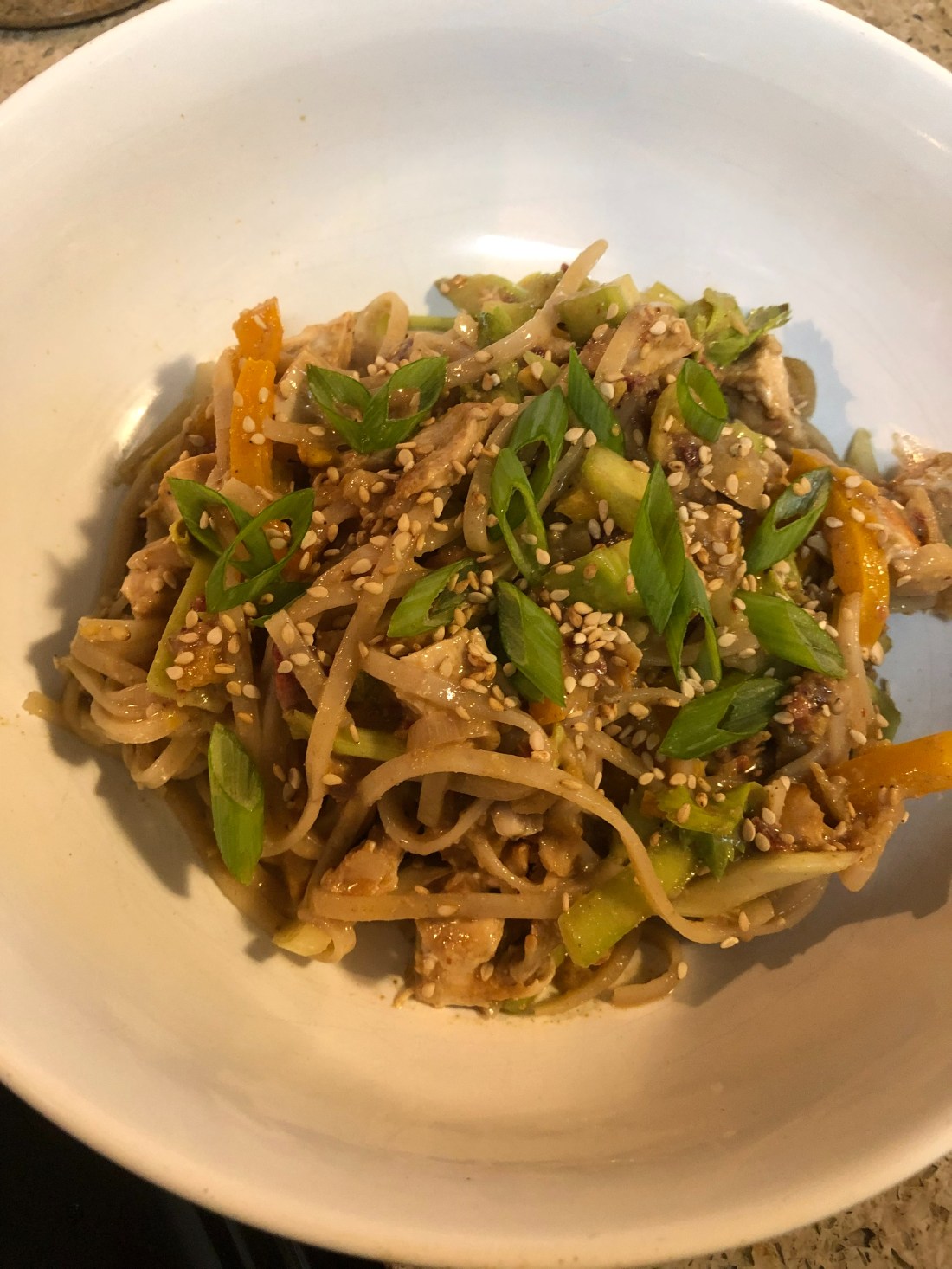
Sesame Noodle Salad

It’s been very hot in Minnesota so I don’t feel much like cooking never mind eating something hot. I’ve been looking for salad recipes and this one is scrumptious and quite easy to put together. Most of the vegetables are raw which means some cutting but very little cooking. Boiling noodles, no problem there. And the sauce can be whisked together very easily. Add some cold meat if you like; I added some grilled chicken breast to mine but even without that, it’s very filling and delicious. This recipe makes two servings as a main dish or 4 as a side dish.

First, put a pot of water on to boil for the pasta. When the water boils add:

6-8 ounces Thai rice noodles or whatever type of gluten-free pasta your family likes

1 teaspoon salt

Cook following package directions. I used the Thai Kitchen brown rice noodles which you throw in boiling water and remove from heat, let sit in the hot water for 5 minutes then drain and put in a bowl of cold water until ready to use.

Next, prepare the vegetables. I can’t eat raw onions or sweet pepper so I sauteed them for several minutes to soften on the cooktop but feel free to add them raw if you like them that way. Into a medium (4-quart sized bowl), combine:

6-8 (depending on size) baby onions (the white parts of the scallions, should be about a half-inch in diameter; these are sometimes called spring onions)

1/2 of a yellow, orange, or red sweet bell pepper, sliced thin

8-10 baby carrots, grated, diced, chopped (I used the food processor for this) or one regular-sized carrot

2 baby cucumbers, peeled and diced

4 stalks of celery, diced

1 small can diced water chestnuts OR 1/2 medium jicama, diced

Next, make the sauce. In a small bowl add:

2 1/2 tablespoons soy sauce substitute (see recipe under sauces/condiments/dressings)

2 tablespoons seed or nut butter (I used my pumpkin seed butter)

1 1/2 tablespoons toasted sesame seeds

1 tablespoon rice vinegar

1 tablespoon date syrup

1/2 teaspoon garlic puree (or crushed garlic)

1/2 teaspoon hot sauce or siracha (more if you want it quite spicy; I think 1 teaspoon would have been better)

1-3 tablespoons hot water to bring the sauce to the right consistency

Whisk together everything except the water. If the sauce seems too thick (it should be the consistency of a creamy salad dressing), add the water a little at a time.

Pour the sauce over the vegetables, drain the noodles and toss them with:

1 tablespoon toasted sesame oil

and add them to the bowl and mix to combine. Cut:

1-2 scallion greens

On the diagonal as a garnish. Add more sesame seeds as a garnish as well (about 1 tablespoon). Serve.

To serve as a main dish, add some diced grilled chicken breast; diced beef; shredded turkey breast; or other protein like grilled tofu. This would be the perfect vehicle for leftover rotisserie chicken or turkey breast.

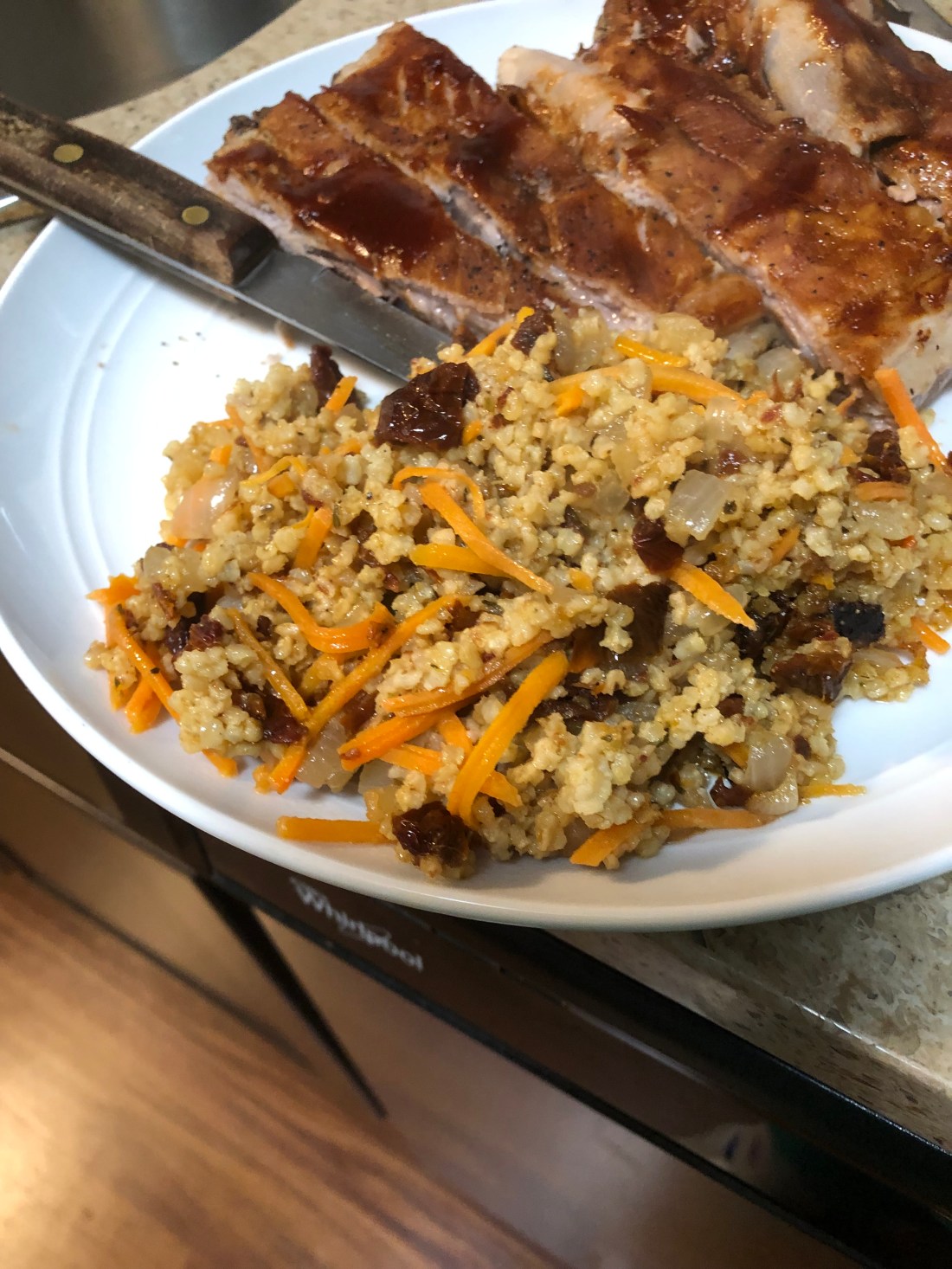
Spiced Carrot Millet

If you’re looking for something different as a side dish, here’s a tasty way to go. If you haven’t tried millet, or just used it for breakfast, this gives you a great introduction to using it as a savory side dish. Per usual, the recipe is very adjustable – carrot is one way to go but parsnips, butternut squash, or even pea puree would work just as well depending on your family’s tastes. It’s fairly quick, about 30 minutes to prepare, and quite an easy, straightforward recipe. Enjoy something different!

First, in a 12″ skillet over medium heat dry toast:

1 cup whole millet

While the millet is toasting, in a 4-quart saucepan, over medium high heat, bring to a boil:

2 cups stock (I used vegetable stock but use any type you like, or even water, works)

Once millet is toasted (about 3-5 minutes, stirring occasionally), add it to the boiling stock. Stir to combine, cover and reduce heat to medium low or low, and cook through, about 20 minutes, until water is evaporated and the millet is softened.

While the millet cooks, in a double boiler, steam:

3/4 cup carrots (I used the pre-sliced but any kind will work)

Steam until soft and then blend, using a hand-held immersion blender with:

1 teaspoon onion powder

1 teaspoon garlic powder

1 teaspoon cumin (or 1/2 teaspoon cumin and 1/2 teaspoon turmeric)

1 teaspoon sweet paprika

1/2 teaspoon ground coriander

Salt and pepper to taste (about 1/2 teaspoon salt and 1/4 teaspoon black ground pepper)

In the bowl of a food processor, or using a hand grater, grate:

6-8 baby carrots

You should have about 1/3 to 1/2 cup. Once the millet is cooked, stir in these grated carrots and cover again. Let sit for 2-3 minutes. Once the cooked carrots are pureed (you could also use a food processor or stand blender), add to the millet mixture, stirring to combine.

Finish with some avocado oil, vegan butter or margarine; or a squeeze of lemon and/or 1/2 teaspoon grated lemon rind. Garnish with some cilantro, green onions or chopped carrot top if desired. Serves 8.

Easy Roasted Turkey Breast

Turkey is easy to overcook producing a dry, not very appetizing meat. If you don’t have a meat thermometer, I would suggest you invest in one. It makes cooking meats, especially poultry, much easier.

Turkey can also be rather bland so it needs help to bring out the flavor. This recipe combines a number of herbs to do just that. If you have time, rub the turkey breast, under the skin as well as on the skin, with the herb rub and then refrigerate for several hours.

Watch the turkey breast carefully while baking and take the internal temperature often after about 50 minutes so that it doesn’t get above 160 on the meat thermometer. This is meant for 2 people but the breast can serve up to 4, just increase the vegetables. As with many of my recipes, feel free to change out the herbs to suit your family’s taste as well as the vegetables – any root vegetables will work in this recipe.

Preheat oven to 350 degrees. Prepare a baking dish a little larger than the turkey breast and spray with non-stick cooking spray or coat with a non-dairy margarine. In a medium bowl combine:

1 large onion, sliced

5-6 celery stalks (I used celery hearts so if you have whole celery, reduce this number), cut into large pieces

12-15 baby rainbow carrots, exclude the orange ones

1 medium sweet potato, peeled and cut into medium-sized cubes*

2 tablespoons olive oil

If some of the baby carrots are on the larger size, cut them in quarters so all the vegetables will cook evenly. Mix the vegetables together to coat them with oil. In a small dish combine:

1/2 teaspoon dried thyme

1/2 teaspoon sea salt

1/4 teaspoon ground black pepper

1/2 teaspoon garlic granules

1/4 teaspoon dried marjoram

1 teaspoon dried sage

Mix the herbs together to combine. Add about 1/4 of the herb mixture to the vegetables and mix once again. Pour the vegetables into the prepared baking dish. Using paper towels, dry thoroughly:

2 1/2 to 3 pound turkey breast (this is a half breast)

Pull up the turkey skin and sprinkle the flesh with the herb mixture, reserving some for the other side. Rub into the flesh and then fold back the skin onto the meat and sprinkle a little more herb on the skin. Place the breast on top of the vegetables skin side down and sprinkle the remaining herb mixture on the bottom of the breast, rubbing it in. Flip the turkey breast so that the skin side is up. Roast in the oven for approximately 25 minutes per pound or until internal temperature is 160 degrees.** Remove from the oven and place the turkey on a serving platter, loosely cover with foil and let rest for about 10-15 minutes.

Spoon the roasted vegetables into a serving bowl.*** When the breast is rested, cut and serve. If desired, pan gravy can be made with the fat in the pan by adding gluten-free, all-purpose flour until all the oil is absorbed (probably about 2 tablespoons) and then cook the flour for several minutes over medium heat before adding approximately 1 cup of chicken (or turkey) stock for each tablespoon of flour used. Or, for fat free gravy, heat 1 1/2 cups of chicken (or turkey) stock over medium high heat. Whisk 2 tablespoons of gluten-free all-purpose flour into another 1/2 cup of cold chicken stock and whisk into the stock on the stove. Whisk constantly until the mixture comes to a boil and is thickened.

*If your family doesn’t like sweet potatoes, simply add the orange carrots and perhaps some cubes of red-skin or Yukon gold potatoes.

**FYI, my turkey breast was 2.8 pounds and I cooked it for 1 hour and 20 minutes before it reached 160 degrees. Remember it will continue to cook when removed from the oven and covered with foil.

***The carrots weren’t cooked when I removed the turkey so I increased the oven temperature to 425 degrees and cooked the vegetables for about 20 minutes more. This not only cooked the carrots but it also browned the sweet potatoes making them a little crunchy.

Easy Roast Pork with Mustard Gravy

I found this recipe and thought it sounded interesting. Not too many changes were required to make it fit our needs. Use either a small boneless pork roast or a large pork loin (about 2 pounds) and for a quick and easy meal, instead of peeling and cutting up large carrots, use one bag of either regular or rainbow baby carrots. All together, this recipe takes just about an hour, 10-15 minutes prep time and about 40 minutes baking. Feel free to change out the herb used on the roasted carrots if your family prefers something else – thyme, oregano, tarragon or rosemary will all work. Same with the carrots – parsnips, sweet potato, cubes of winter squash, any vegetable you can roast would work.

First, preheat the oven to 450 degrees. Next, pour into baking pan, with 1 to 2 inch sides:

12 ounces to 1 pound of baby carrots

4 or 5 small to medium shallots, peeled and sliced in half lengthwise

Sprinkle the carrots and shallots with:

1/2 teaspoon salt

1/4 teaspoon ground black pepper

1/4 to 1/2 teaspoon garlic granules

1/4 to 1/2 teaspoon dried marjoram

1 to 1 1/2 tablespoons olive oil

Mix up the carrots and shallots with the oil and herbs to combine making sure all the carrots have some oil on them. Put into the preheated oven and cook for approximately 10 minutes. While the veggies are beginning to roast, heat in a 10″ skillet:

1 tablespoon olive oil

While the oil heats, season with salt and pepper:

1 1/2 to 2 pound pork loin or boneless pork roast

Sear off all sides of the pork in the hot oil, about 2 minutes per side which takes about 10 minutes. Remove from the heat. Remove the pan from the oven, push the carrots and shallots aside to make space in the middle of the pan for the pork. Return to the oven and cook for approximately 30-40 minutes until the internal temperature of the pork reaches 145-150 degrees. Take out of the oven and place the pork and vegetables on a plate, loosely over with foil or parchment paper to keep warm while the gravy is made.

To make the gravy, pour the oil from the skillet into the roasting pan and add:

1 to 2 tablespoons gluten-free all-purpose flour

Over medium heat whisk to combine with the fat. All the fat should be absorbed by the flour. Cook the flour for about a minute before adding:

1 cup chicken stock (or pork stock if you can find it)

If you used more than 1 tablespoon flour, you’ll need to add additional stock to the baking pan. Let simmer, stirring constantly, for about 2 minutes until thickened. Whisk in:

1 tablespoon mustard, whatever kind your family prefers

When the gravy is ready, slice the pork roast or loin and serve with the carrots, gravy and either mashed potatoes or rice. Serves 2-4 depending on the size of the pork.

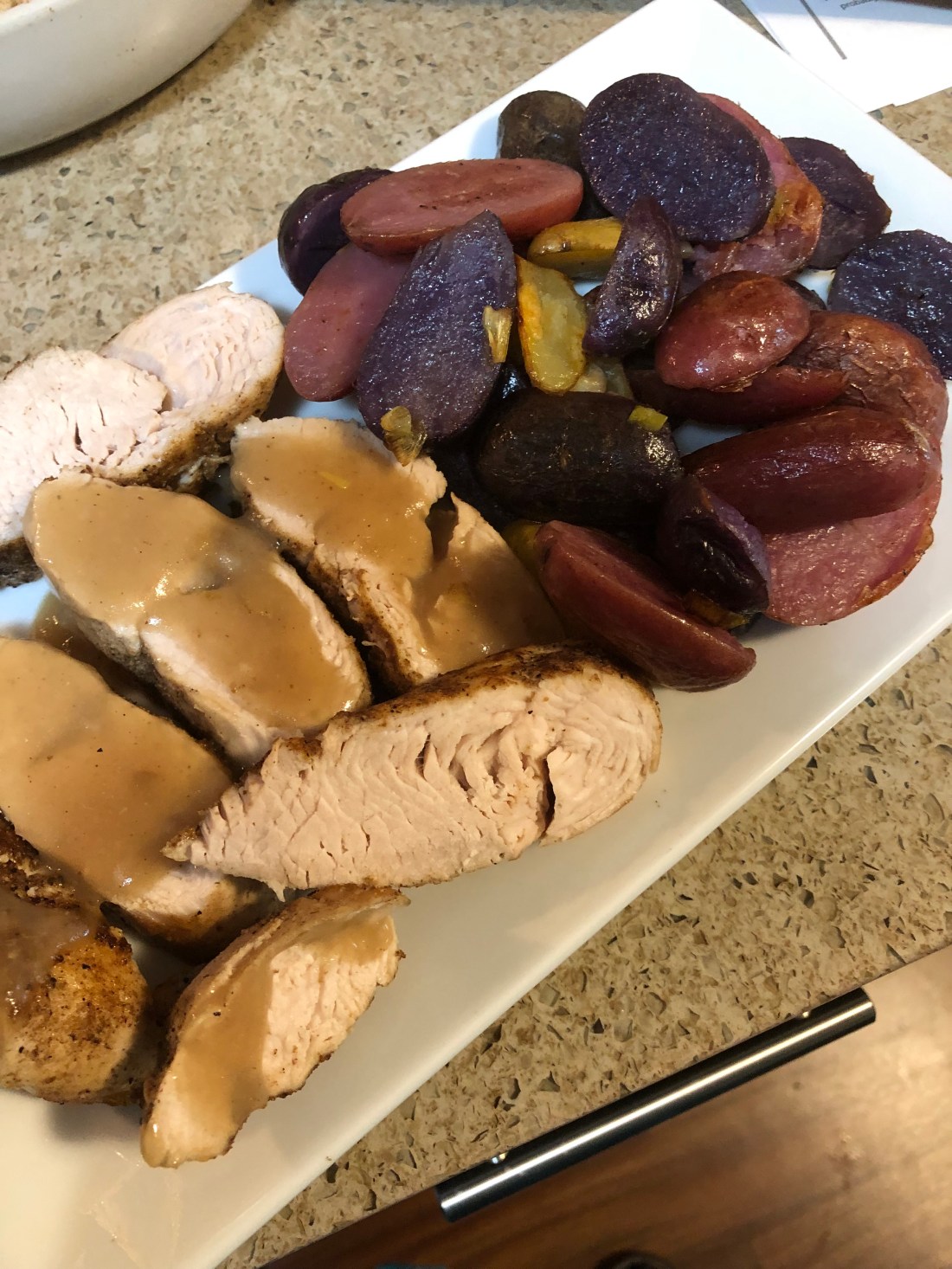
Roasted Turkey Tenderloin with Fingerling Potatoes

Here’s a very easy and quick to put together recipe for dinner. I’m always looking for new recipes for poultry since I eat a lot of it so I was thrilled to find this one that only needed a few small changes. If you can use white wine, use a cup of that in place of one of the cups of chicken stock.

Preheat oven to 400 degrees. Spray or grease (with olive oil) a 10×13 (or larger) baking dish (with 2″ sides). In a 12″ skillet, heat over medium high heat:

1 tablespoon olive oil

While the oil heats, coat:

2 turkey tenderloins (about 1 1/2 pounds)

With about:

1/2 teaspoon salt

1/4 teaspoon ground black pepper

1/2 teaspoon garlic granules

1/2 teaspoon garam masala (or whatever herb your family likes)

Sear the turkey on all sides, about 2-3 minutes per side. Place in the prepared baking dish. Wash and cut in half lengthwise:

24 ounces fingerling potatoes

Arrange the potatoes around the turkey and sprinkle them with:

1/4 cup chopped scallion (whites only) or shallots

Salt and ground black pepper

In a small bowl combine:

2 cups low sodium chicken stock (or 1 cup stock and 1 cup white wine)

2 tablespoons rice vinegar

Pour over chicken and potatoes. Bake for 40-50 minutes or until internal temperature of the turkey is at least 160 degrees and the potatoes are tender. Let the turkey rest for 10-15 minutes before cutting. Pour any remaining stock* over the meat before serving. Garnish if desired with:

4 tablespoons cranberry compote (see recipe under sauces/condiments/dressings)

Makes 6 servings.

*I thickened the remaining gravy with some gluten-free all-purpose flour.

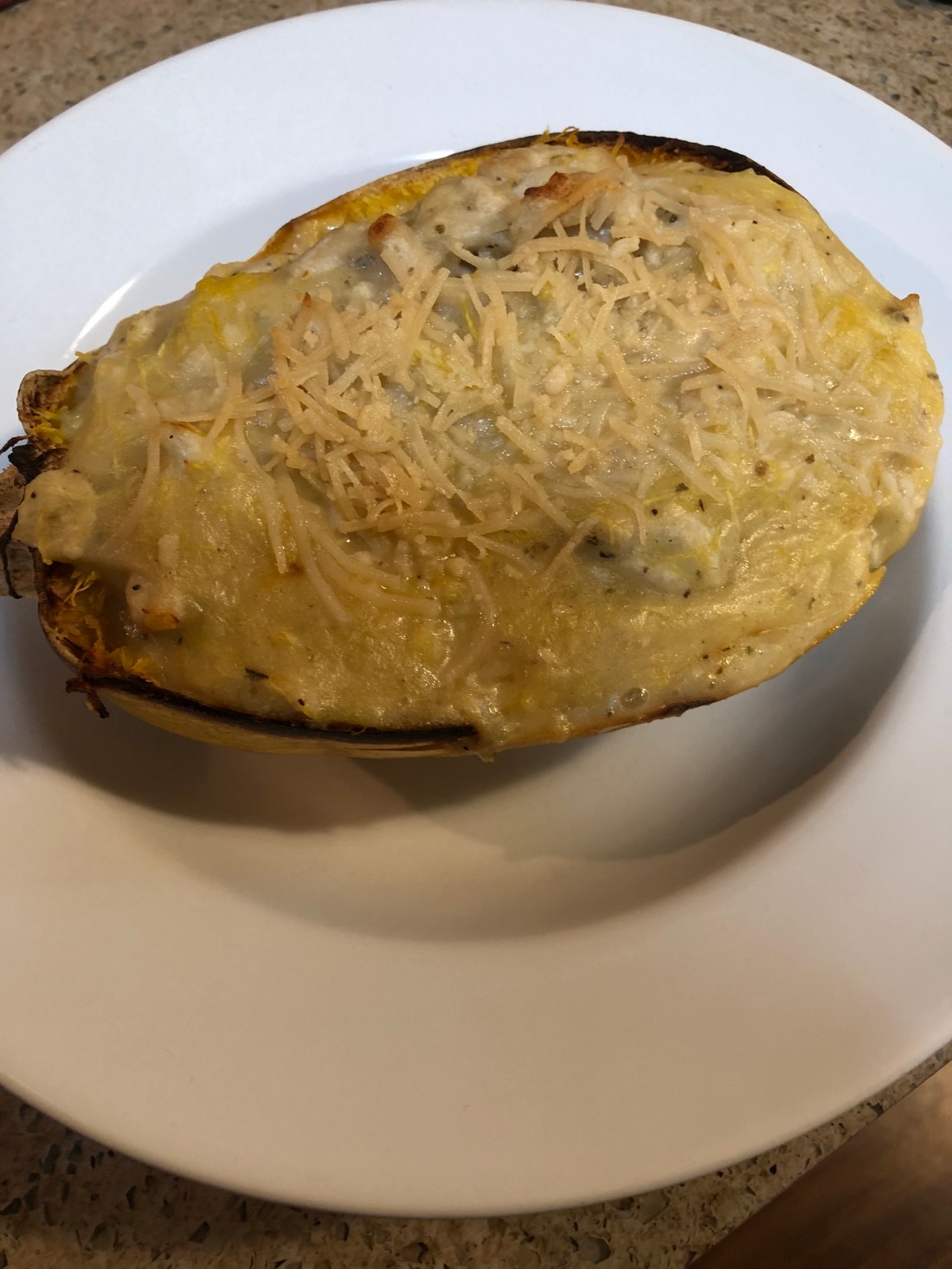
Easy Turkey Alfredo Stuffed Spaghetti Squash

Alfredo sauce is one of the tastiest things I’ve ever eaten and it’s so easy to make. I know there are a lot of steps but it’s a very easy process, none of the steps (except maybe cutting the spaghetti squash in half! are difficult). I blogged Chicken Alfredo several years ago so just used that basic recipe for the sauce. I’ve taken out the fresh parsley because I now can’t eat it and stuffed it into a spaghetti squash which reduces the simple carbs and calories. Don’t care for spaghetti squash? No problem, just mix it up and use it as a sauce for your favorite pasta. Delicious! Enjoy.

First thing is to cook the spaghetti squash. Cut a small to medium sized one in half, scrap out the seeds (if you have a sugar spoon [with ruffled edge] it works great for this), and coat the flesh with:

1 tablespoon olive oil or olive oil spray

Place skin side down in a baking dish, add just about a 1/2 inch of water to the pan and bake in a preheated 400 degree oven for approximately 30-40 minutes depending on the size of your squash. I know, I know, most on-line recipes say to cook a spaghetti squash for 20-30 minutes. I find when I cook it for that short a time, it tends to be wetter producing more mash and fewer spaghetti strands.

While the squash cooks, make some thick rice milk but blending:

1 cup water

1/3 cup cooked rice (brown or white makes no difference)

Then make the alfredo sauce. Over medium heat, heat:

1/4 cup avocado oil

1 teaspoon finely minced garlic

Be sure the heat isn’t too high, we don’t want to burn the minced garlic which will burn very quickly. When the oil starts to sizzle, add:

1 cup thick rice milk (that you just made above)

1/2 cup non-dairy cream cheese

Whisk to combine which takes a moment since the oil must also be incorporated. I thought about reducing the oil to 1 tablespoon (which you should feel free to do if you’re on a low-fat diet) but it does reduce the richness of the dish slightly. Next whisk in:

1/4-1/2 cup parmesan cheese

1 teaspoon dried Italian herb blend (or oregano, thyme and marjoram)

Whisk constantly until cheese melts. Take off the heat. In a 12″ high sided skillet, over medium high heat, heat until shimmering:

1 tablespoon olive oil (or spray the pan with cooking spray if low fat desired)

When the oil (pan) is hot, add:

1 pound ground turkey

Salt, pepper and garlic powder (1/2 teaspoon salt and garlic powder, 1/4 teaspoon pepper)

Don’t oversalt because the parmesan in the sauce is also salty. Cook, breaking up the turkey into large chunks until cooked but not browned (or it will get too dry). Remove from the heat. Next using a fork, scrap the inside of the cooled spaghetti squash to produce spaghetti-like strands. Try to get as much of the squash out of the shell as possible without breaking or cracking the shell (I did have a large crack in one half and a small in the other and they were still useable). Put the squash into the ground turkey skillet and top with the sauce. Mix to combine. Place the squash shells in a sprayed baking dish and spoon in the turkey/squash/sauce mixture until well filled. Garnish with more parmesan and/or fresh parsley and bake for 15-30 minutes until bubbling. Time will depend on the size of your squash.

Salisbury “Steak”

Salisbury steak is basically a hamburger with mushroom gravy. Since I don’t eat beef, I had to change it to ground turkey but since I also wanted to make one last meatloaf before it got too hot, I used a meatloaf mixture to make the “steaks”. If you only need a couple of servings of Salisbury steak, use 1/4 or half the mixture for this dish and bake the remainder in the oven as a meatloaf. Feel free to use whatever ground meat you like, or even pieces of tofu would work. I basically used the recipe I published several weeks ago for turkey burgers with zucchini because they stayed so moist and were so delicious.

In the food processor combine:

1 large onion, cut into quarters

1 medium zucchini, cut in half lengthwise and then into chunks

1/2 cup carrots

Pulse until shredded. In a large bowl combine the vegetable mixture with:

1 pound ground turkey

1 pound ground pork OR

1 pound mild/sweet Italian sausage (pork or turkey)

Add to the mixture:

1 1/2 teaspoons ground cumin

1 1/2 teaspoons paprika (smoked or sweet)

3 teaspoons ground coriander

3 teaspoons garlic powder or granules

3 teaspoons sea salt

1 1/2 teaspoons ground black pepper

1/2 cup non-dairy Parmesan cheese (Optional)

Mix to combine (I used my hands, much easier than a spoon!). Using a 1/2 cup measure, scoop out the mixture and form each 1/2 cup into a burger shape (should make 10-12). In a 12″ skillet heat over medium high heat:

2 tablespoons olive oil

Add the burgers and saute them until cooked through, about 5 minutes per side depending on the thickness, firm to the touch when cooked). Probably have at least 2 batches, perhaps 3 depending on the size. As they are cooked, remove to a plate. Add to the pan:

12 ounces of sliced mushrooms (I used baby bellas)

Cook until softened, about 3-4 minutes over medium heat, stirring often. When the mushrooms are cooked add:

2 tablespoons gluten-free, all-purpose flour

Stir or whisk in so the flour absorbs all the oil. Cook over low heat for 1-2 minutes and then add:

1 1/2 cups chicken stock (or bone broth)

1/2 cup dairy-free milk (anything but soy), unsweetened

Salt and pepper to taste

If you are cooking all the mixture as Salisbury steak, you may need to increase the oil, flour, and liquid to make additional gravy. Cook over medium heat, stirring constantly until thickened, about 2-3 minutes. Add the patties back into the sauce to reheat before serving. Serve over rice, mashed potatoes, or pasta.

I know, more brown food! Just can’t seem to stay away from it. But it really was so delicious!