I follow another food blogger who writes about traditional German recipes and every once in a while one comes along that sounds pretty good to me and easily adapted to allergy free. As usual, feel free to adjust to your tastes. Leave out the bratwurst and the dish becomes a side dish. It would also be very good with some diced apple or pear, much like the braised cabbage recipe on my blog.
In a large, high sided skillet, over medium high heat:
2 tablespoons olive oil
When shimmering add:
2 medium onions thinly sliced
12 ounces cole slaw mix (or small white cabbage shredded)
2 large baby bok choy washed and sliced into chunks
Salt and pepper to taste (I used about 1 teaspoon of my Herbamare and 1/4 teaspoon pepper)
2 teaspoons date syrup (or date sugar if you don’t have date syrup, or 1 teaspoon agave)
Stir to combine and then stir every minute or so to keep the bottom from burning. When sizzling, reduce heat to medium and continue stirring every minute or two until caramelized, about 15-20 minutes. The onion and the cabbage will release liquid as they cook and that needs to evaporate before the mixture can begin to caramelize. Most important to stir often once the liquid is gone. Deglaze the pan with:
1 1/2 cups chicken stock (or 1 cup stock and 1/2 cup white wine if you can have it)
Add:
1 bay leaf
1 teaspoon lightly crushed caraway seeds (I put them in my spice mill for about 2 pulses)
Stir and reduce heat to medium low and simmer until about half the liquid has evaporated, about 10 minutes. Sauce should thicken slightly as it reduces.
As the cabbage mixture is simmering, in a separate skillet over medium high heat:
1 tablespoon olive oil
Add:
4 pork bratwurst, casings removed*
Brown on all sides then reduce heat to medium, cover, and let cook until cooked through, about 7-8 minutes. Slice into bite size pieces and add to the cabbage mixture. Be sure to remove the bay leaf before serving. Can be served over noodles.
*Feel free to use any sausage your family prefers.
Hash is a favorite of mine. It’s so tasty and so versatile. Any meat, any vegetables can be used in hash. It’s not just corned beef hash anymore! After I made the roasted turkey breast the other day, I had over half the breast left (since there’s only one of me and the recipe served 4). I’d already cooked plenty of sweet potatoes (but there’s nothing wrong with cooking more!) and had some rainbow carrots in the freezer. Hash is so easy to make, hope you’ll give it a try.
I served this with the leftover turkey pear gravy! Oh so delicious
In a large skillet (12″), heat over medium heat:
2 tablespoons olive oil
When shimmering add:
1 medium onion diced
3-5 celery stalks, diced
When the onion is becoming translucent, add:
2 cups diced cooked sweet potato (or white if you prefer)
1 cup cooked rainbow carrots, sliced or diced
2 not quite ripe pears, peeled and diced
1-2 teaspoons minced garlic
Salt and pepper to taste
Mix to combine and continue cooking until sweet potatoes start to brown. Stir in:
2-3 cups cooked turkey, diced
Lower heat to medium low and cover. Cook for approximately 2-3 minutes until turkey is hot. Remove lid, stir. At this point, if eggs are allowed in your diet, crack 4 eggs on top of the hash, cover and cook until eggs are ready. Serves 4.
I hit 200 recipes on the site the other day! This is a recipe I learned from a dear departed friend of mine. She called it Irish potatoes. Easy side dish to prepare and very delicious. My grandson would rather have this with a meal than practically anything else. He especially likes to have the leftovers for breakfast the next day with eggs (and bacon if his mother will let him!).
For 4 people, I use:
2 medium to large sized russet potatoes, peeled and diced*
2 medium sized sweet potatoes, peeled and diced (I had some purple on hand but any sweet potato will work)
1 medium onion, diced
1-2 sweet peppers, diced
1 teaspoon minced garlic
1/4 cup olive oil
Salt and pepper to taste
Place the diced potatoes in a pot of cold water, just covering the potatoes, and cook until a fork will pierce but not split the pieces. If the potatoes cook to fully done, they will be mushy when you fry them.
In a skillet large enough to have a single layer of potatoes (about 12″) heat over medium heat:
1/4 cup of olive oil (or other if preferred)
Add:
Diced onion
Diced pepper (I used the yellow and orange because I can’t digest the green)
Cook until the onions and peppers are softened. Add the potatoes and garlic, salt and pepper. Stir to combine and cook for about 3-5 minutes depending on the size of the potatoes before turning and repeating. A crispy outside and soft inside is what we want here but hard to achieve if you flip the potatoes too often or too soon. Also difficult if there’s not enough oil in the pan. Might have to reduce the heat if the sweet potatoes start to brown too quickly (they will burn easier than the russet chunks). The dish is ready when a majority of the potatoes are crispy and golden brown. Feel free to garnish with chopped parsley.
*Try to make the dices roughly the same size so that they will all cook at the same speed. Having large and smaller pieces will give you mushy fried potatoes since the smaller ones will cook so much faster.
I eat a lot of chicken. Probably out of my 21 meals a week, I eat chicken for at least 12 of them. So finding new and different ways to prepare chicken is something I never stop doing. My brother sent me a Barnes and Noble gift card for my birthday and I finally made it over there (now that I’m fully vaccinated) a few days ago and imagine how wonderful it was when I found The Chicken Bible, by the America’s Test Kitchen. A cookbook with 500 different ways to prepare chicken! I’m in heaven looking through this cookbook every day searching for a new way to make my chicken taste delicious. And this one is a definite winner. If someone needs to watch salt intake, skip the olives. Serves 4.
Cut into thin strips (or chunks if preferred realizing they’ll have to cook longer):
1 pound (2 large boneless breasts, split or 6 boneless chicken thighs – remove skins before slicing)*
Dry the chicken with a paper towel and sprinkle with:
1/2 teaspoon sea salt
1/8 teaspoon ground black pepper
In a medium Dutch oven, over medium high heat:
2 tablespoons olive oil
When hot add the chicken and cook, without stirring, until it starts to brown. Then stir and continue to cook until just about cooked through. Using a slotted spoon, remove to a bowl and cover. To the pot, add:
1 tablespoon olive oil
1 medium onion, diced
Cook until the onion is translucent then add:
2 teaspoons minced garlic
1/2 teaspoon dried Italian herbs (basil, oregano and thyme)
pinch of red pepper flakes (optional)
Cook about one minute or until you can smell the garlic then add:
4 cups chicken stock
Bring to a boil and add:
8 ounces gluten-free penne
Reduce heat to medium and continue on a slow boil until penne is al dente, about 6-8 minutes depending on the brand used. Stir frequently, sauce should reduce and thicken while the penne is cooking. Stir in:
6-8 ounces artichoke hearts, quartered (I used the vacuum packed ones available at Whole Foods but frozen will work just as well)
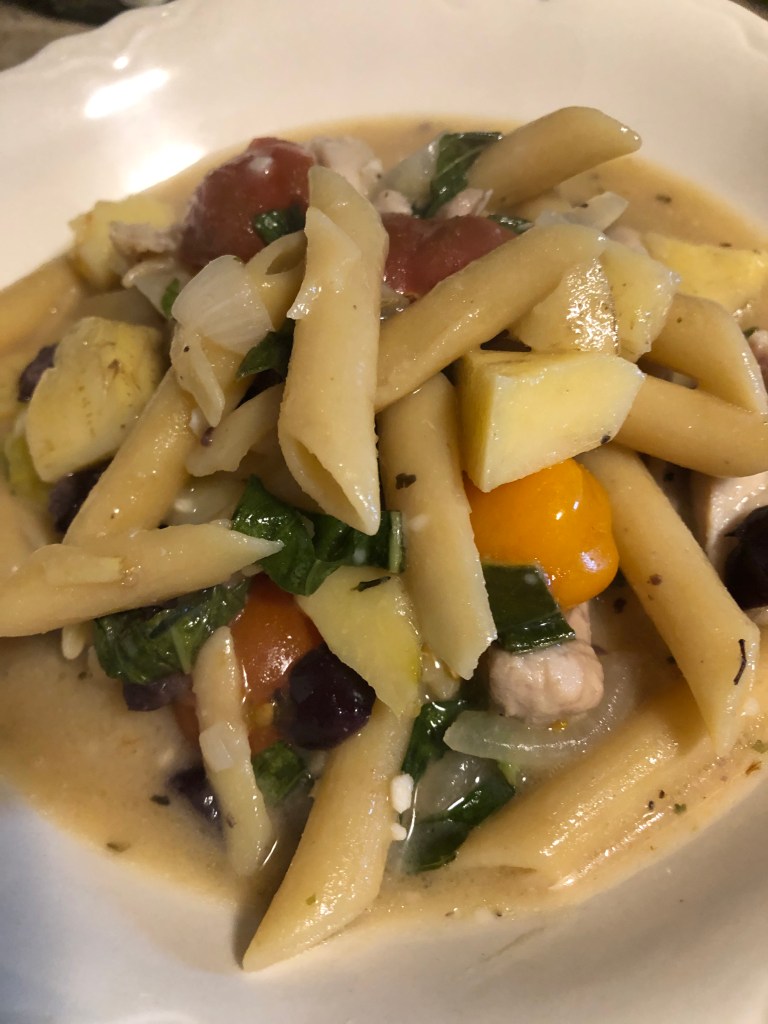
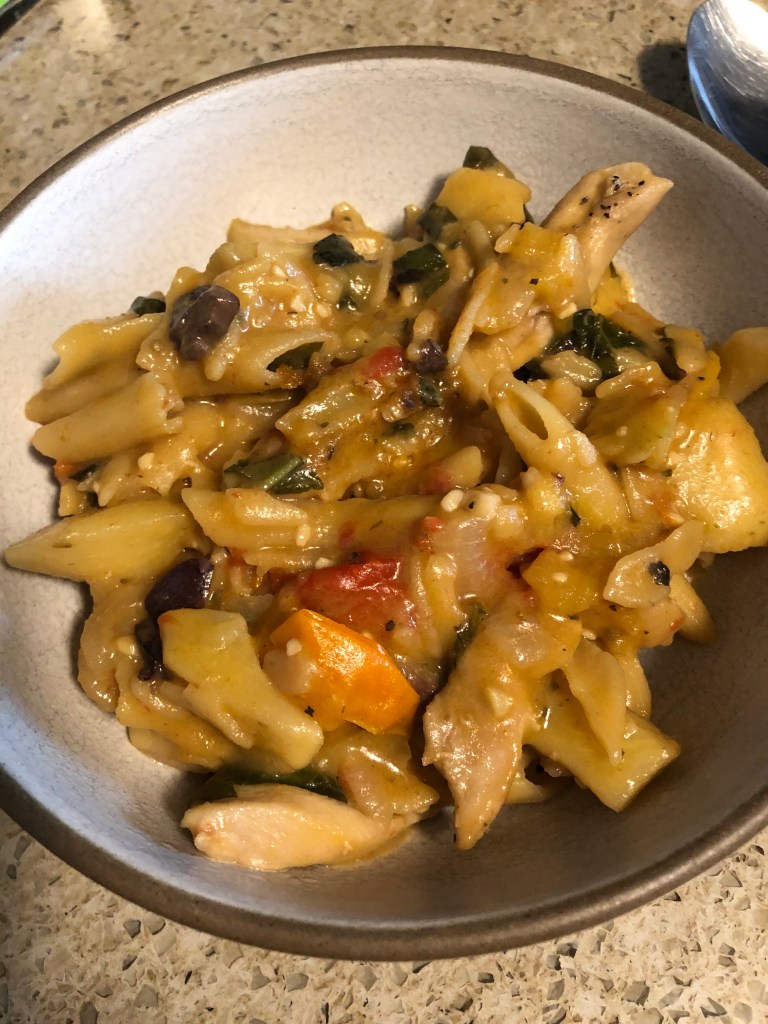
Cook an additional 5-8 minutes or until sauce sticks to the pasta. The sauce should be quite thick, not at all soupy (see example below). Add:
Chicken pieces
12 ounces of cherry or grape tomatoes, halved or quartered depending on size
1/4 cup kalamata olives (chopped)
1/4 cup Parmesan cheese, grated (Follow Your Heart makes a delicious vegan Parmesan already grated)
Cook until chicken is reheated, tossing the pasta lightly. Add:
1/4 cup chiffonaded basil leaves (roll the leaves into a log and thinly slice)
Toss the pasta once again to mix in the basil, taste and add additional salt and pepper if needed and serve.
This is not what you want, see the sauce on the bottom of the plate, too soupy!
This is what it should look like. See how the sauce sticks to the pasta.
*Whenever I need to slice chicken, if I’m using frozen chicken, I try to catch it when it’s still just slightly frozen because its much easier to slice when its partly frozen. If using fresh chicken, try putting it in the freezer for 15-20 minutes before slicing.
If you like sage, think about your Thanksgiving stuffing, you will LOVE this recipe! I especially enjoyed the fried sage on the top, something I’d never done but oh how delicious! This recipe is fairly easy as long as each individual step is followed and the chopping and slicing is done in advance.
This recipe serves four:
3 tablespoons olive oil
4 ounces prosciutto, sliced
8-10 large sage leaves, plus 3 tablespoons minced (or 3 teaspoons dried sage)
1 pound boneless chicken, breast and/or thighs, sliced (the thinner its sliced the faster it will cook)
1/4 teaspoon sea salt
1/8 teaspoon ground black pepper
1 onion, minced
2 teaspoons minced garlic
1 tablespoon all purpose gluten-free flour
3 cups chicken stock
8 ounces gluten-free vermicelli or spaghettini
2 tablespoons capers, rinsed (optional)
2 tablespoons butter substitute
1/2 teaspoon lemon zest plus 3 tablespoons juice
First, in a large skillet (or a Dutch oven) with high sides, heat, medium high, 1 tablespoon olive oil until it shimmers. Add the prosciutto pieces as individually as possible because unlike bacon, they will not fully separate as they cook, cook until crisp, about 4-5 minutes, reducing heat slightly if needed. Remove the prosciutto from the skillet and place the sage leaves in the oil and cook them until crisp, about 30-40 seconds. Place prosciutto and sage on a paper towel.
Next, dry the chicken, then sprinkle with the salt and pepper. Heat another 1 tablespoon of oil in the skillet, again medium high heat, add the chicken in a single layer and cook, not stirring, until it starts to brown, 1-2 minutes. Then stir it and cook until nearly cooked through, about 2-3 minutes or longer depending on thickness. Remove to a bowl, cover and keep warm.
Add the last tablespoon of oil to the skillet and add the onions. Cook over medium heat until translucent and starting to brown. Stir in the garlic and minced sage and cook until just fragrant, about 30-40 seconds. Stir in the flour and cook for about 1 minute. Add 1 cup of chicken stock, scrape down the sides of the skillet and stir to smooth out any lumps, simmer until reduced by about half, about 5-6 minutes.
Stir in the remainder of the stock and the pasta. Increase heat to medium high and cook at a slow boil until pasta is tender, about 10-12 minutes. Stir frequently. The sauce should thicken more during this cooking.
Lastly, add the chicken back in along with the capers (if used), butter substitute, lemon zest and juice, stir to combine and cook for another minute or two until the chicken is heated. Remove from heat and add any additional salt and/or pepper that may be needed. Cover and let sit for about 5 minutes and it will absorb any extra sauce into the pasta.
Sprinkle with the prosciutto and fried sage leaves and serve.
This is a hearty dish that will warm you through and through on those colder days. Perhaps that’s what made me think of it this past week here in Minnesota – after a wonderful few weeks in the 50s and 60s, it suddenly fell back into the 30s! Not difficult to make and so delicious to eat. Feel free to change up the vegetables to ones your family prefers.
Cut vegetables:
1 medium onion, diced
3 stalks of celery, diced
2 medium to large carrots sliced
1 large parsnip (or 2-3 smaller ones), sliced and/or diced depending on size
Add the diced onions and celery and cook for 3-5 minutes. Add the remaining vegetables along with:
3 cups chicken stock
Simmer over medium low heat until the vegetables are cooked through. Add:
2 cups cooked and diced chicken
1 pound asparagus, cut into 1-2 inch pieces**
1 cup frozen green peas
1 teaspoon dried thyme
1 teaspoon dried basil
1 teaspoon dried marjoram
Simmer until chicken is heated through and the peas are cooked, 5-6 minutes, then increase heat to medium and add slurry made with:
3 tablespoons gluten-free all purpose flour
1 cup non-dairy milk (any milk EXCEPT soy)
Cook, stirring constantly, until thickened. Serve over pasta, mashed potatoes, or rice or even as a filling for a chicken pot pie. Makes 6 servings.
*This stew can be “summerized” by using zucchini, yellow squash, green beans, mushrooms instead of the winter root vegetables.
**If preferred, the asparagus can be cooked whole in a skillet until tender and served alongside the stew. If the stalks are quite thick, peal the asparagus before cutting into pieces.
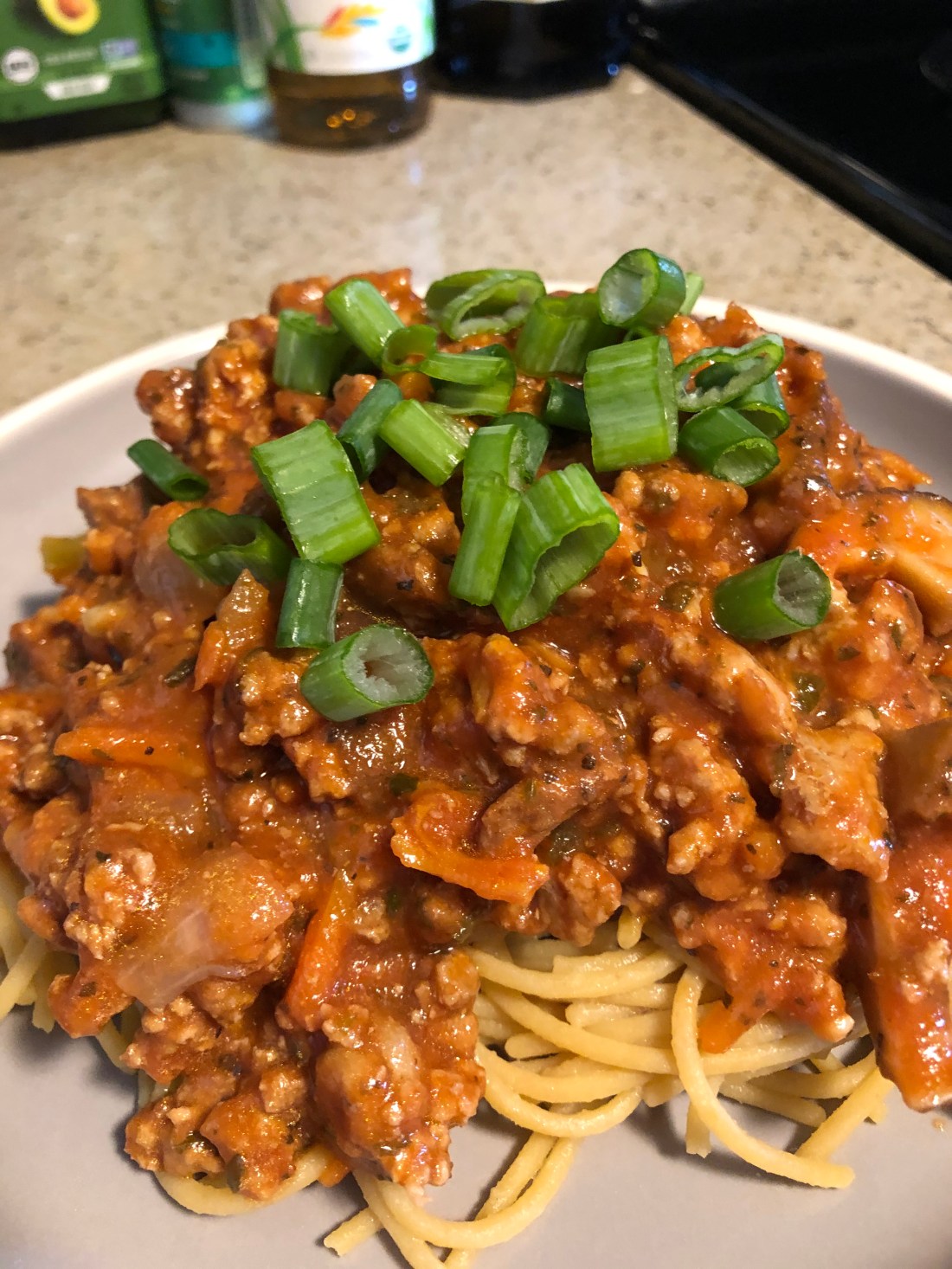
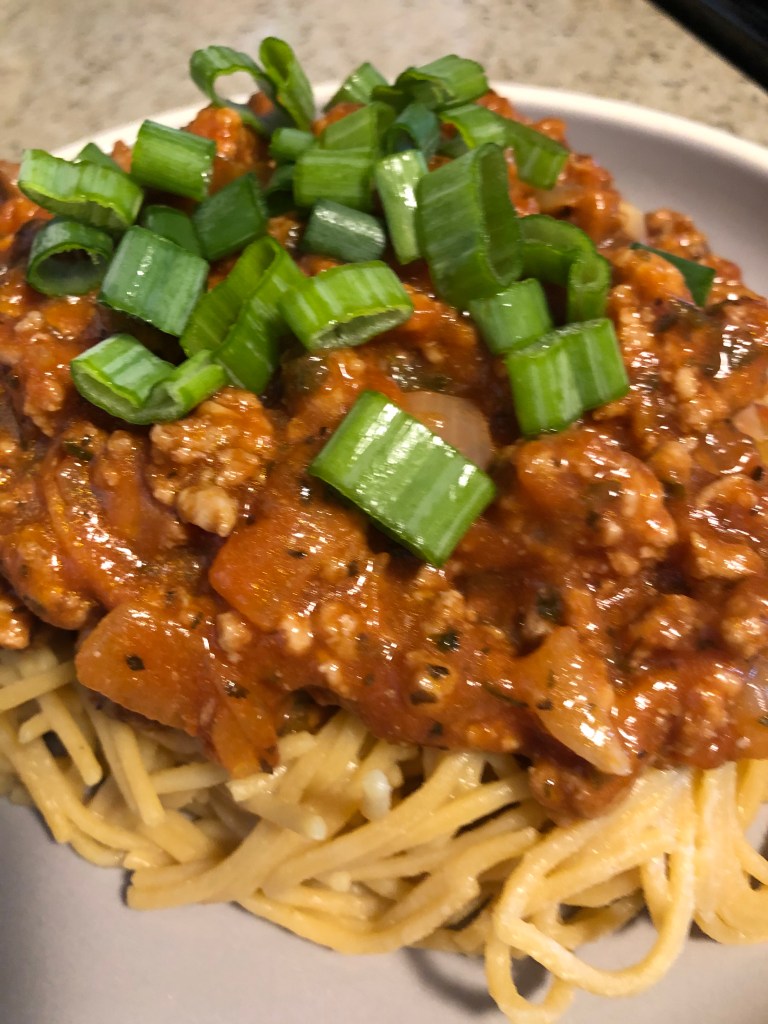
What’s better than a bowl of pasta with a rich, unctuous, makes you go ummmmmm sauce? That’s exactly what you get with a Bolognese sauce. The centerpiece of this sauce is the meat, lots of meat with a few vegetables thrown in for good measure and not much tomato sauce. I think in large measure the rich unctuousness of the sauce comes from starting off with a quarter cup of olive oil. That builds the flavors as each is added. This will serve 6-8 people easily. Serve over whatever kind of pasta your family prefers but a larger pasta, i.e., spaghetti rather than linguini, will hold the sauce better.
In a large stew pot, heat:
1/4 cup olive oil
Over medium high heat. Add:
1 medium onion, chopped
1 large or 2 medium celery stalks, chopped
1 large or 3/4 cup of carrot, chopped
2 teaspoons minced garlic
Reduce heat to medium and cook about 5 minutes until vegetables begin to soften. Remove from heat. In a large skillet with high sides, heat over medium high heat:
2 tablespoons olive oil
Add:
1 pound ground turkey
1 pound ground pork
Salt and pepper to taste
Sauté stirring frequently to break up the ground meat until there’s no pink left and any juices have steamed away.Add to the vegetables along with:
28 ounce can of crushed tomatoes
If you choose, like I did, to use dried herbs add them now with the tomato. If you choose to use fresh herbs, add them about 15 minutes before the sauce is ready.
Stir to combine all ingredients, reduce heat to low simmer, partially cover (in other words leave the lid at an angle so that steam escapes), and cook for at least one hour. I actually left my sauce to cook for almost 2 hours which helps the vegetables break down and integrate into the sauce.
Before serving, stir in 1/4 cup grated cheese*
TIP: I did add 6 ounces of shitake mushrooms, just because I had them on hand and they needed to be used.
*Follow Your Heart makes a parmesan cheese that contains no coconut or nuts of any kind and tastes just like parmesan cheese, at least to me! The traditional recipe calls for grated pecorino Romano cheese.
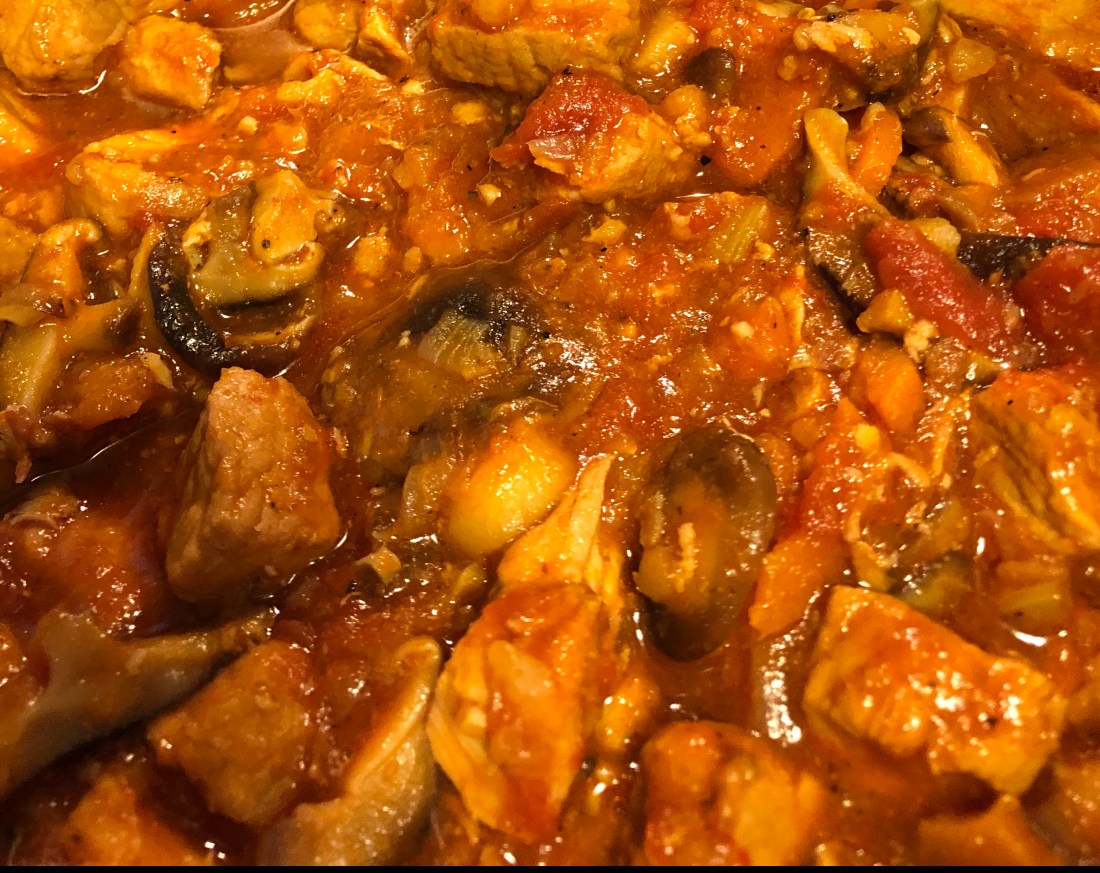
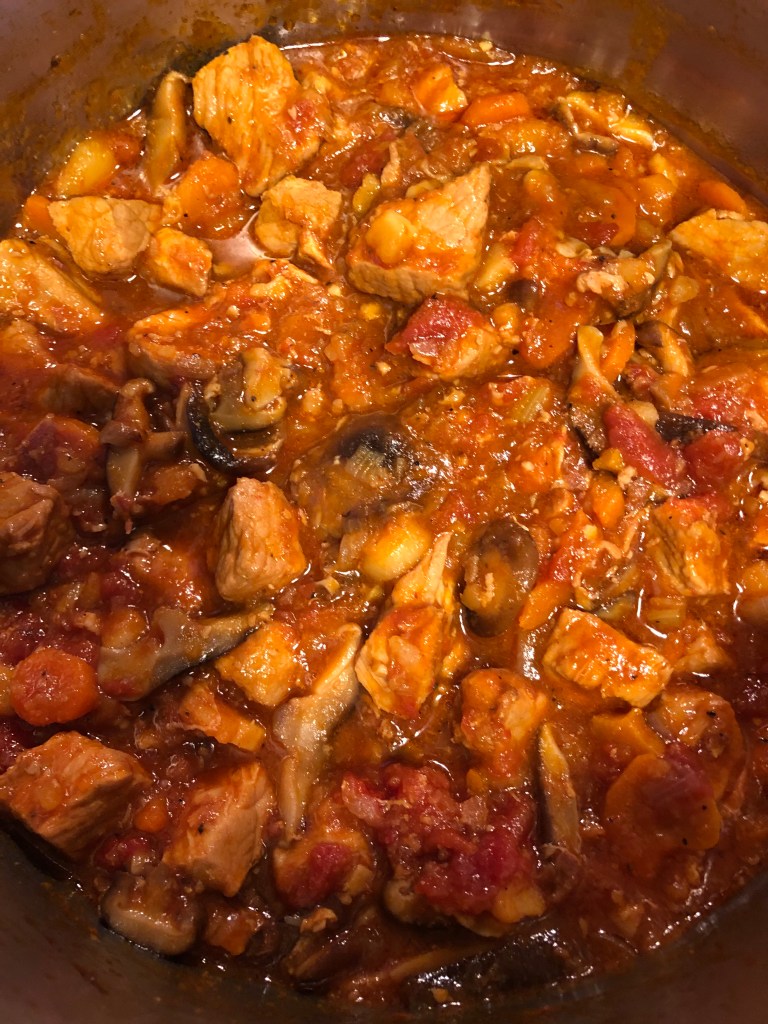
Found a great recipe for a pork stew for a slow cooker. I don’t have a slow cooker since I’m retired and can watch the stove all day when necessary. So you can do this in either a Dutch oven like I did or in your slow cooker. Either way it’s delicious, a little spicy, and can be served with a variety of sides, either mashed potatoes, spaghetti squash, rice, or pasta. It also doesn’t take long to put together, just cooks for 3-4 hours.
You’ll need:
1 tablespoon olive oil
1-2 ounces pancetta or bacon
1-2 pounds pork cubed and most of the fat removed
1 medium onion diced
1 large carrot diced
2-3 stalks of celery diced
1 tablespoon minced garlic
1 teaspoon salt or herbamare
1/2 teaspoon ground black pepper (want it a little spicier, use white pepper)
1 1/2 cups chicken stock
14 ounce can of diced tomatoes (if using 2 pounds of pork, use a large 28 ounce can of diced tomatoes)
2 teaspoons sweet paprika (add more with more meat)
1/8 teaspoon cayenne pepper (optional)
In a large skillet (if you’re going to use a slow cooker) or a Dutch over, heat the olive oil before adding the cubed pork and pancetta (or bacon). Cook, stirring occasionally, until pork is browned. Remove from the pot (to your slow cooker if using one) or just set aside if not.
Add the vegetables to the pot and cook until the onion is translucent before adding the garlic. Put the pork back into the pot, add the stock and the tomatoes, salt, pepper and paprika. (If using a slow cooker, add the vegetables to the cooker once the stock has come to a boil with the vegetables so that the pan is deglazed.) Reduce heat to a simmer and, cover with the lid so that a little steam can escape, and cook for 2-3 hours or until most of the liquid is cooked off. Cook on high in the slow cooker for 3-4 hours. The meat will almost shimmer when the dish is ready.
TIP: I like a lot of vegetables in my stews so I also added 1 cup of sliced mushrooms. I meant to add a cup of frozen peas near the end but it didn’t happen. Green beans would also be fine in this stew.
When I lived in Pittsfield, Massachusetts, there was a wonderful Vietnamese restaurant that introduced me to all kinds of new flavors. One of our favorites were their spring rolls! What a delicious concoction; meat, rice noodles and vegetables wrapped in a rice paper shell and deep fried. Oh so good. Generally a spring roll contains pork or shrimp and a summer roll (the unfried version of a spring roll) contains shrimp and no noodles but bean sprouts instead. Here I’ve substituted chicken but any meat (or meat substitute) would work. And they aren’t difficult to make as long as the steps are followed.
First cook whatever part of the filling needs cooking.
To a large pot of boiling, salted water add:
8 ounces pad Thai noodles (or linguini, gluten free of course!) [Optional but traditional]
Cook until tender, about 3-5 minutes, drain, rinse with cold water and set aside to add to the cooked vegetables later. In a medium 10″ skillet over medium heat, heat:
1 tablespoon olive oil
Add:
1/2 medium onion, sliced
1 cup of thinly sliced Chinese (or Napa) cabbage
Reduce heat to medium low and cook for several minutes until the onion and cabbage wilt. In a small bowl whisk:
1 tablespoon soy substitute
1 tablespoon date sugar (or syrup)
1/2 cup rice vinegar
1 tablespoon sesame oil
Add to the skillet and stir to combine with the onion and cabbage. Add the pad Thai noodles if used. Remove the vegetables from the skillet. Either clean that skillet or using another, heat:
1 tablespoon olive oil
Add over medium heat:
16 ounces of chicken breast, julienned (thinly sliced)
Cook, turning frequently, for several minutes, 3-5, until chicken is cooked. Remove from heat.
Let the vegetables and chicken cool thoroughly. If the fillings aren’t cool enough, they will melt the rice paper wrapper. In the meantime, prepare the uncooked fillings, any or all of the following:
1 medium carrot, any color, julienned
1 English cucumber, peeled and julienned
1 cup zucchini noodles cut into 4 inch sections
1/2 cup pea pods
2-3 green scallions (green parts only), cut into 4 inch sections
1/2 cup Daikon radish (julienned)
Avocado (julienned)
2 tablespoons sesame seeds (white or black)
Fresh herbs can also be added such as mint or basil leaves
As you can see, pretty much any vegetable could work, even string beans! You’ll also need:
10-12 rice paper wrappers (found in most oriental or specialty stores (or Whole Foods)
When the fillings are all prepared and cooled, using a 12″ container (I used a large pie plate), fill with about 1″ of warm water, not hot, just lukewarm works best. One at a time, place a rice paper wrapper , into the warm water, making sure the wrapper is covered by the water. You don’t want to soak it, just wet it completely. You’ll notice when it’s wet enough because the marks on the wrapper will disappear. Place the wrapper on a clean tea towel (cotton rather than a synthetic or fleece towel) and dry. I picked up the wrapper at this point, carefully, so it didn’t stick as much to the towel after filling.
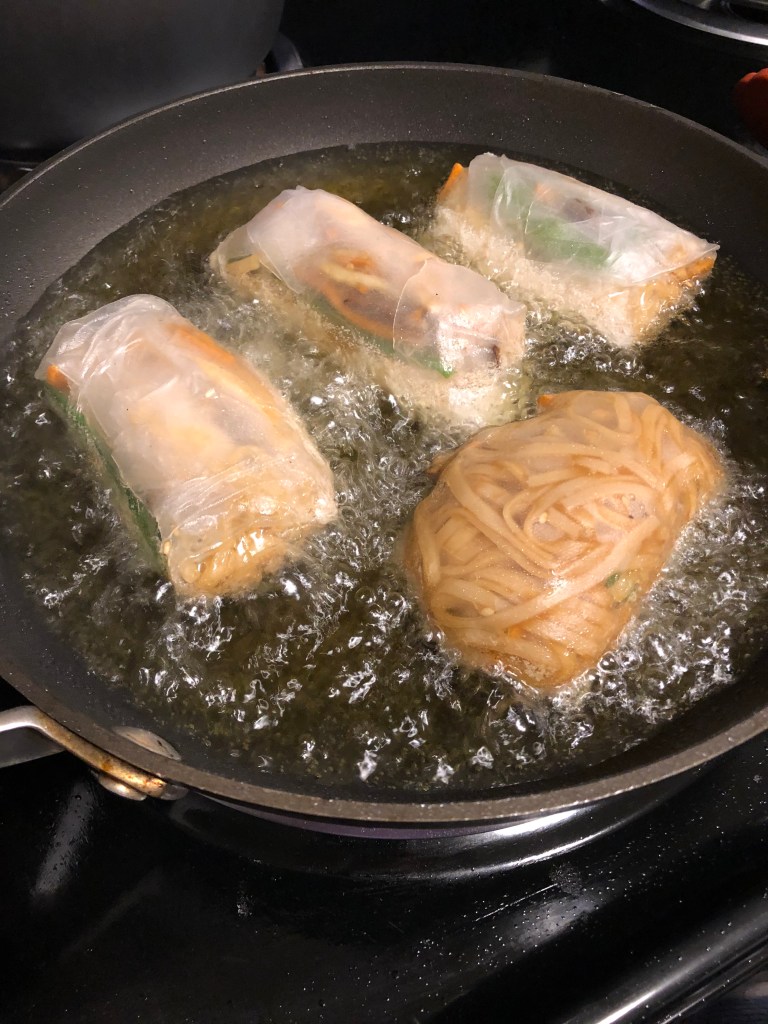
As you see from the photo, I broke one but it was still useable. Once dried, place some of the fillings in the middle of the wrapper, horizontally, then fold the bottom of the wrapper over the filling being sure it is tight at the top. Then fold in the sides of the wrapper and roll it up from the bottom to the top. The top should stick to the rest of the roll. If it doesn’t, rub a tiny amount of water on it with your finger.
Now comes the choice – spring or summer rolls? The only difference is the frying. If spring rolls are chosen, cook all of them. I cooked half and left the others for the next day’s lunch and they totally disintegrated in the oil the next day, the rice paper didn’t hold up to being refrigerated.
If spring rolls are the choice, heat in a large, high sided skillet:
3 inches of olive and avocado oils
Heat to 350 degrees. Olive oil has a low smoke point so mixing it with the avocado (which has a higher smoke point) keeps the olive oil from burning during this process. Once the oil is to temperature, add the spring rolls being careful not to overcrowd the pan. Fry, turning once (tongs are best for this), until golden brown. Unlike most fried foods, do not place these on a paper towel as the rice wrapper will stick to it even after fried. Instead blot lightly with the paper towel after frying.
If, like me, several of your wrappers formed holes when wrapping them in the vegetables, DON’T FRY THEM! The oil will get into the roll and it will be very greasy. Use it as a summer roll instead.
Dipping sauce (or dressing) if desired. Traditionally spring rolls are served with a peanut sauce but the restaurant always served them with a spicy soy/ginger/garlic sauce. Here are several recipes for dipping sauces.
“Peanut” Dipping Sauce:
Combine in a small bowl:
1/2 cup tahini or other seed or nut butter
1 tablespoon soy substitute
2 tablespoons rice vinegar
1 teaspoon minced garlic
1 tablespoon grated fresh ginger
1-3 tablespoons hot water depending on the thickness desired
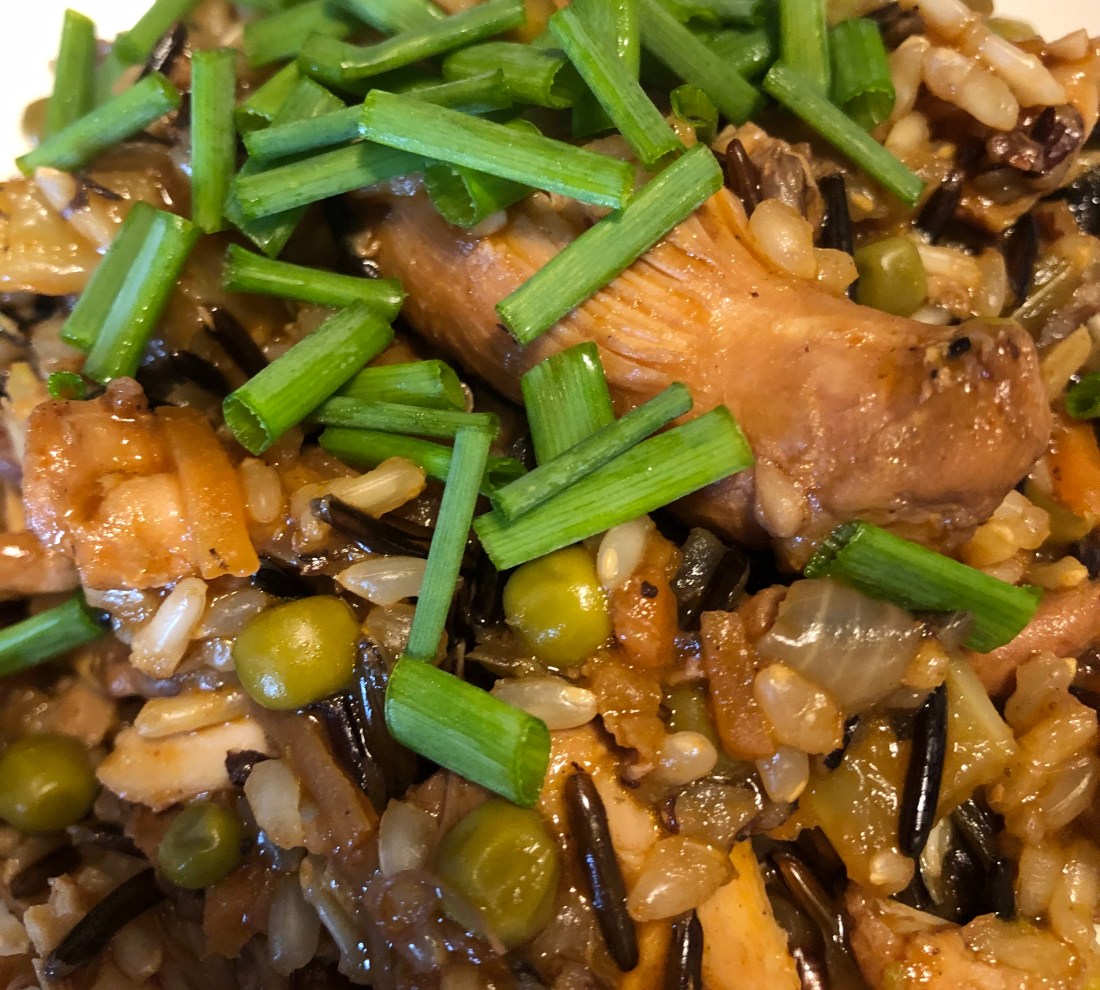
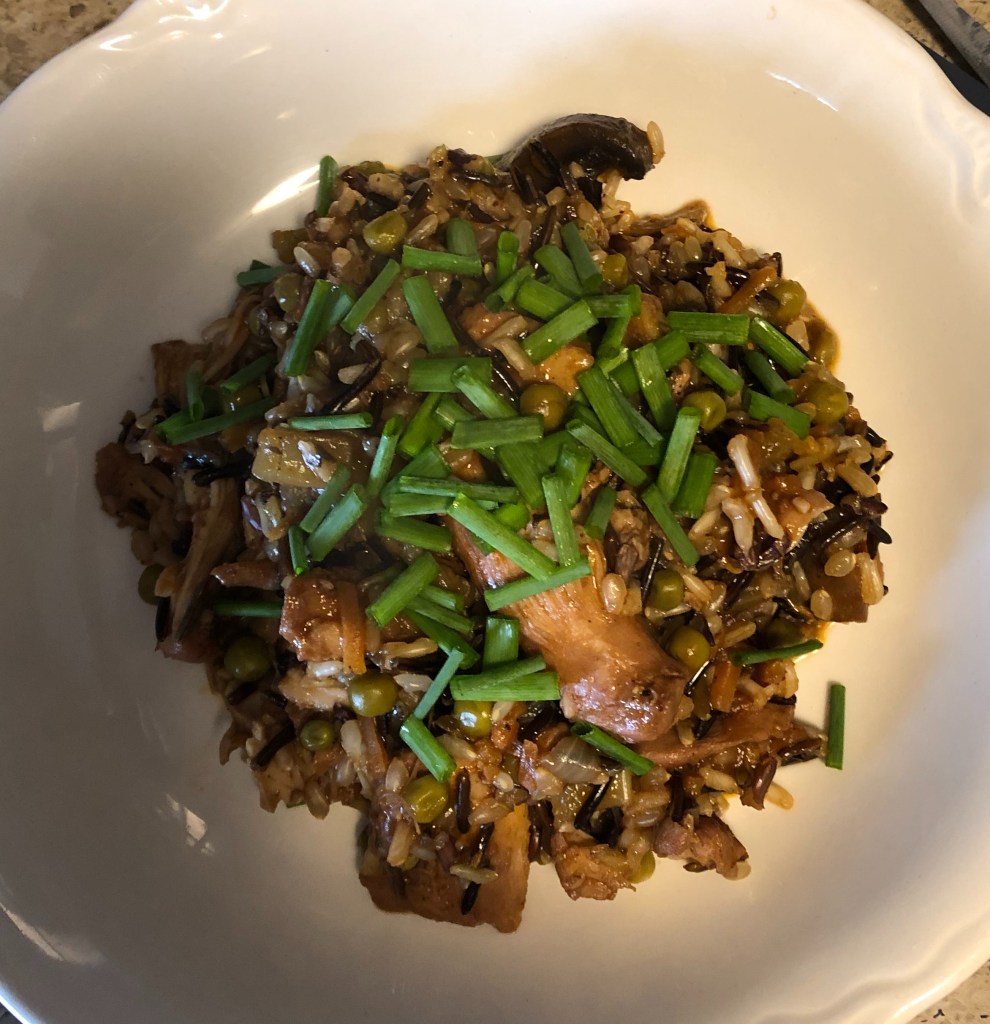
I’ve been making rice with meat for years. It’s a convenient, easy way to stretch meat when you don’t have much of it and lots of people to feed. And a great way to use up extra vegetables because it’s an adaptable recipe where any combination of meat and vegetables works fine. The recipe feeds 6 or 4 generously.
This will be my last blog post for several weeks as I now need to concentrate on finishing my screenplay which was due today but I’m not happy with it yet so have to concentrate on that for the next few weeks.
In a Dutch oven, heat over medium high heat:
2 tablespoons olive oil
Add:
6 boneless skinless chicken thighs or breasts seasoned with salt, pepper and garlic powder (if using breasts cut into large cubes
The object is to brown the meat and build flavor as well as sear the meat to keep all the juices in it. This should take about 5 minutes, 2 1/2 minutes per side. When browned, remove the chicken pieces to a plate and add to the pot:
1 medium onion diced
6-8 stalks of celery diced
1/2 cup chopped carrots (or grated)
1 cup diced mushrooms
Sauté for several minutes until onion starts to brown. Add:
1 teaspoon minced garlic
2 tablespoons tomato paste
1/2 teaspoon ground allspice
1/8 teaspoon ground cloves
2 teaspoons to 2 tablespoons sweet or spicy paprika depending on your taste
2-3 bay leaves
1 cup frozen or fresh peas (if using fresh, add with the rice)
2 cups chicken stock (or, if possible, 1 cup of white wine and 1 cup of stock)*
1 tablespoon date syrup or date sugar
Stir to mix and add the chicken back into the pot along with any juices that are on the plate. Cover and simmer on low heat for approximately a half hour until chicken is cooked. Stir in:
1 cup rice (I used a wild rice blend but feel free to use whatever rice you prefer)
Simmer covered until rice is cooked, stirring frequently to be sure rice doesn’t stick to the bottom of the pot. This should cook out all the liquid but if not, cook uncovered until most of the liquid is gone. If the rice isn’t cooked but the liquid is all absorbed, add 1/4 cup stock and continue cooking covered until rice is done. Remove the bay leaves, taste and add additional salt if needed. Serve garnished with chives.
*If using wine, deglaze the pan with the wine before adding the stock. This will cook off the alcohol.








 cookingwithoutallergens