Garlic Boneless Chicken Thighs

I apologize for not having a photograph to go with this post. These got eaten up so quickly after I made them that I didn’t manage to get a photo. Nonetheless, this is worth the read. One of the quickest and easiest ways to cook boneless chicken thighs (you could also use boneless chicken breasts if you wanted but they might take a little longer if cooked whole). Prep and cook time is about twenty minutes. And it’s very versatile – substitute the listed herbs for a different flavor or serve it with different sides (I made mine with some Thai brown rice noodles that we all love, gluten-free of course). The sauce that cooks with the chicken coated the noodles for a delightful bite. Serves 4.

First, clean and dry:

1 1/2 to 2 pounds boneless skinless chicken thighs (about 6-8 depending on size)

Next, coat the thighs with the following mixture:

  • 1 teaspoon onion powder
  • 1 teaspoon garlic powder
  • 1/2 teaspoon dried thyme (or 1 teaspoon fresh chopped)
  • 1/2 teaspoon dried marjoram (or 1 teaspoon fresh chopped)
  • 1/2 teaspoon salt
  • 1/4 teaspoon black pepper
  • a pinch of cayenne pepper (optional)

Coat each thigh evenly on both sides. Heat a large skillet with 2 tablespoons olive oil over medium high heat. Add the chicken thighs, spread flat and cook for 5 minutes until golden and crispy. Flip over to other side and cook for 2-3 minutes. Remove the chicken to a plate (take the skillet off the heat while you do this so the oil doesn’t burn). Add:

  • 2 tablespoons garlic puree or minced garlic

Move pan back to the heat, reduce to medium and sauté until you can smell it, about 30-45 seconds. This is a good time to put a large pot of water on to boil if you plan on serving the thighs with a type of pasta. Add to the pan:

  • 1 cup chicken stock
  • 8 ounces of sliced mushrooms
  • 1/2 cup of frozen peas
  • half of a medium onion, diced
  • 3 stocks of celery, diced

Stir the contents of the pan, scraping up any browned bits from the bottom with a wooden spoon. Bring the stock and vegetables to a boil before adding the chicken back into the pan being sure to add any liquid that’s on the plate along with the chicken. Let mixture simmer and reduce for about five minutes until it’s reduced to about half. Add:

  • 1/2 cup non-dairy milk (or if you can have it, 1/2 cup white wine)*

Continue simmering until chicken is cooked which should only take a couple more minutes. Remove from the heat and taste for seasoning, add more salt and pepper if needed. Remove chicken to a plate and toss whatever pasta (or rice) into the sauce, top with the cooked chicken thighs and serve immediately. Sit back and watch it disappear!

*If you add wine instead of the milk, add with the stock and vegetables.
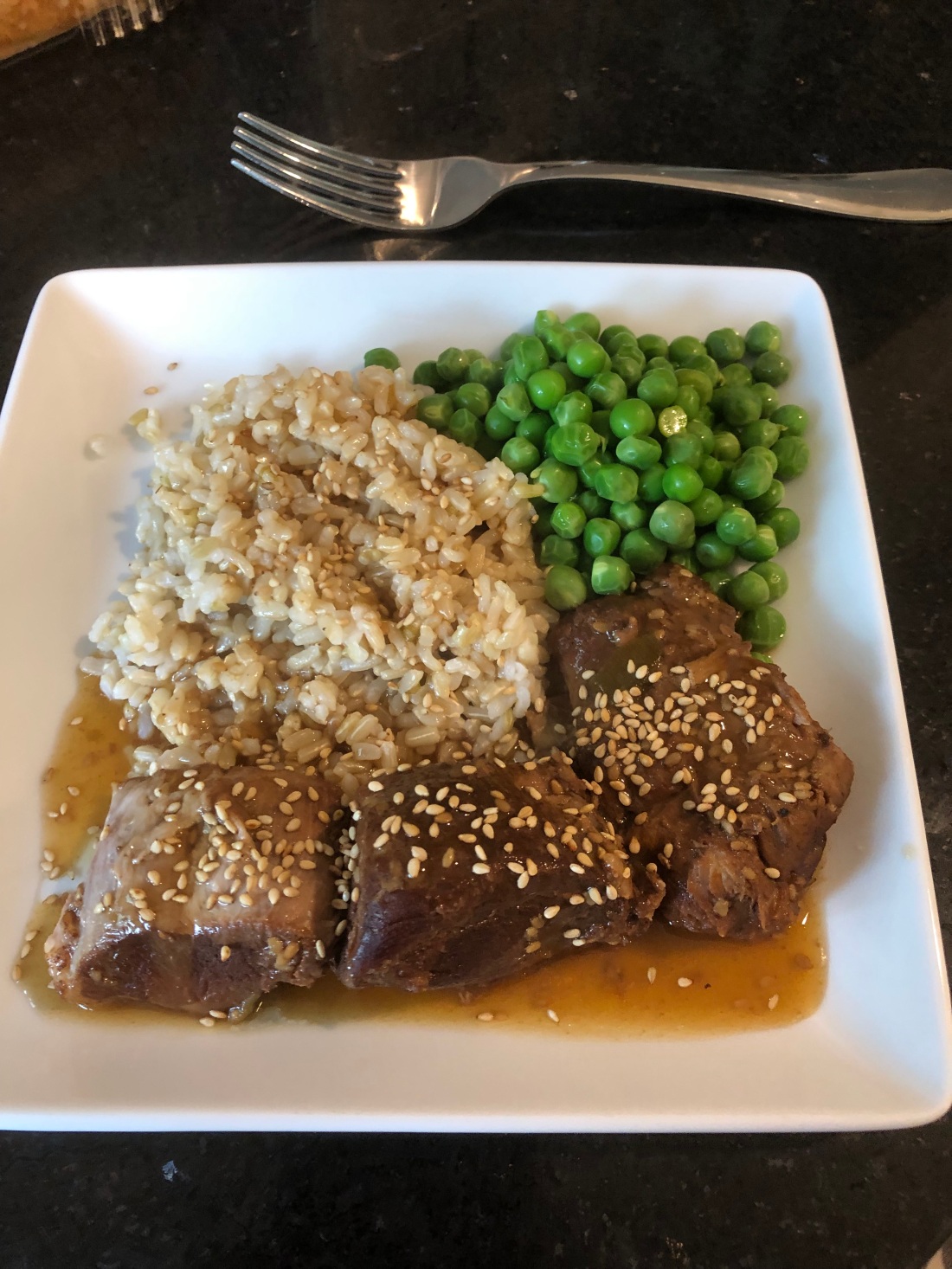
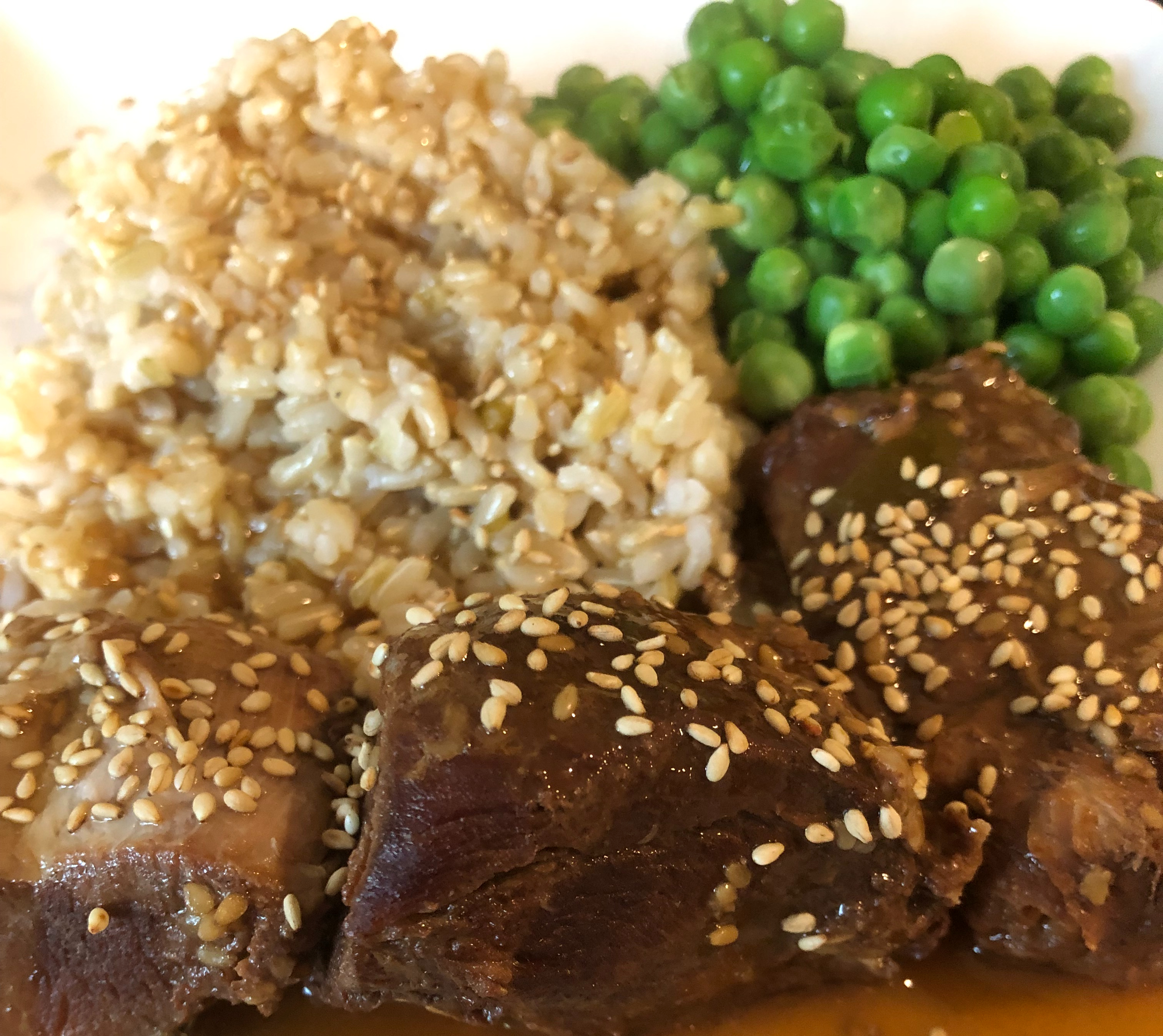
Sesame Pork Roast

My son and I share a love for pork. Mine definitely comes from growing up on a farm where my father raised at least four pigs every year. I have fond memories of driving about twenty miles south to a butchery outside of Concord where my parents sent the hams for smoking every year. And a local grocer in Tilton would turn much of the meat that wasn’t usable as roasts or chops (or ribs) into ground pork and especially, my father’s favorite, pork sausage. I’ve tried several recipes for pulled pork but they turn out so dry and stringy. Here’s one that’s quite the opposite probably because it’s marinated overnight. Good umami flavor!

Combine in a bowl:

2 1/2 cups mushroom stock (if you can use soy, use 2 cups water and 1/2 cup soy sauce)

1/4 cup toasted sesame seeds

1/4 cup unsulfured molasses (or date syrup)

1/4 cup white or rice vinegar

2 teaspoons garlic powder

1/4 teaspoon paprika

Whisk to combine and then pour half the marinade into a large gallon food storage bag. Pour the other half into a storage container and refrigerate. Then add to the bag:

4 pounds of pork – if using a boneless roast, cut in half to make two thinner pieces and then cut each half in half; if using a bone in roast, slice into thinner pieces leaving the bone area intact

Make sure all the meat is covered by the marinade. I put the bag into a casserole dish in case of leakage and placed it in the refrigerator. Marinate overnight (I actually left mine in the fridge for two days).

When ready, drain the marinade from the bag and discard. Put the roast into an instant pot, add the reserved marinade, cover and cook for about 35 to 40 minutes. (Of course, if you prefer you can use a slow cooker on high for one hour and then on low for approximately 8 hours.)

When done, remove the meat to a serving dish. Shred, if you like, using two forks. Pour the liquid from the cooker into a fat separator and then pour the juices into a small saucepan. Combine:

2-3 tablespoons arrowroot depending on how much liquid is in the saucepan

1/4 cup water

Whisk to dissolve the arrowroot before adding the mixture to the juices in the saucepan. Bring the sauce to a boil whisking constantly until it thickens, about two minutes. Garnish the roast with:

1/2 cup sliced green onions

and more sesame seeds if desired. Serves four.

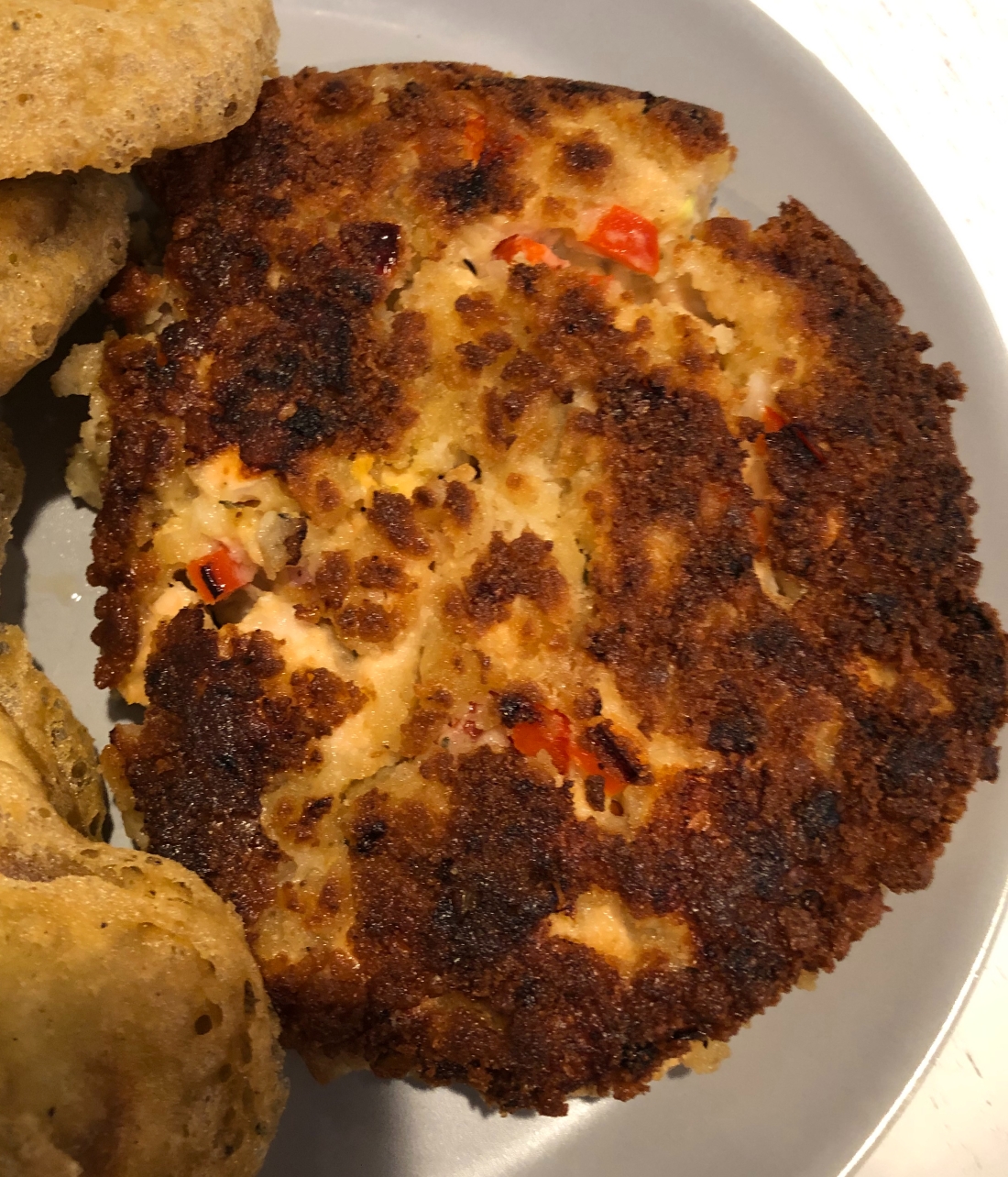
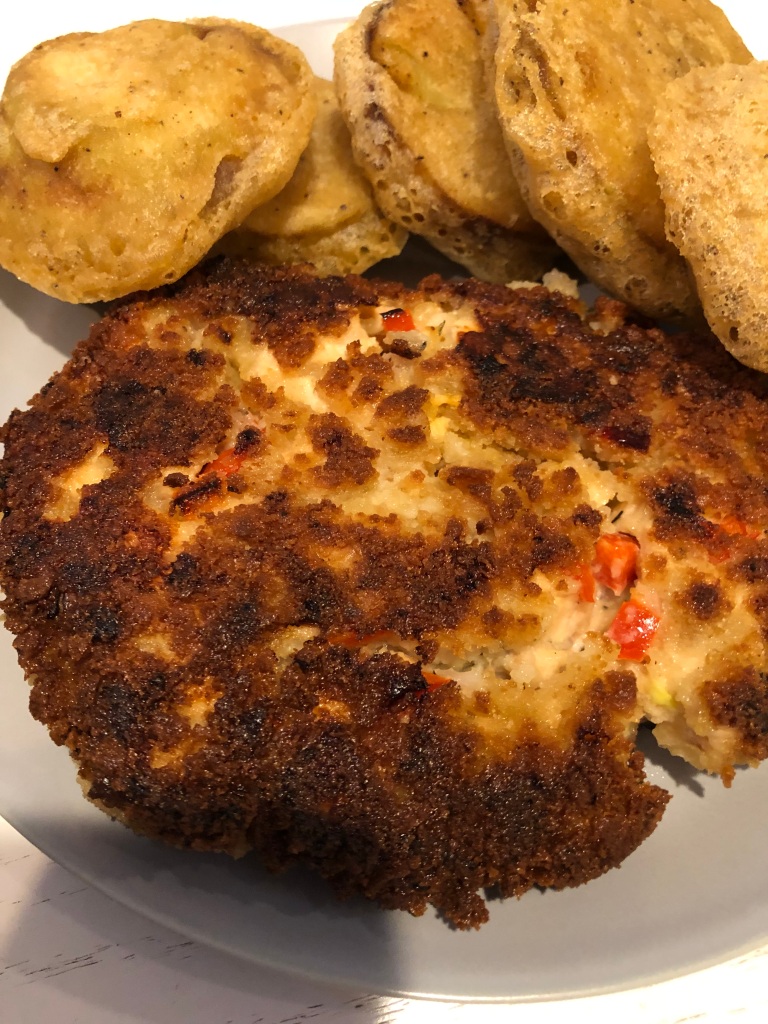
Salmon Cakes

Not my favorite fish by a long shot but my grandson loves salmon. So I thought I’d give these a try and to my amazement and his delight, they turned out delicious. Quite easy to make as well but it does take some planning ahead since the mixture has to sit for several hours before the patties are formed. This allows the bread crumbs to absorb some of the liquid so that the patties will hold their shape. It could be done the night before so that the next day the patties can be formed and cooked.

First, in a small skillet heat over medium heat:

1 tablespoon olive oil

When hot, add:

1/4 cup sweet onion, minced

2 tablespoons minced red pepper

2 tablespoons minced celery

1/4 teaspoon salt

1/8 teaspoon ground black pepper

Cook mixture about 5 minutes or until onion is translucent. Next mix together in a medium bowl:

1 1/4 pounds fresh salmon, roughly minced

1/4 cup vegan mayonnaise

1/4 cup gluten-free bread crumbs, unseasoned

1 teaspoon minced garlic

1 teaspoon mustard

1/8 teaspoon paprika

1/8 teaspoon Old Bay seasoning

1/4 teaspoon salt

1/8 teaspoon ground black pepper

Mix thoroughly then cover bowl and refrigerate for at least two hours (but it can sit overnight). Then form the salmon mixture into four patties about 1 inch thick. In a plate with an edge (like a pie plate) mix together:

1/4 cup gluten-free bread crumbs

1/4 teaspoon salt

1/8 teaspoon ground black pepper

1/8 teaspoon garlic granules

1/8 paprika

Coat the salmon patties with the breadcrumb mixture. Heat a large skillet that will hold all four patties. Add:

1 tablespoon olive oil

4 salmon patties

Cook on each side until golden brown and cooked through (the patties will not give when touched) on both sides, about 4-5 minutes per side. Serve with lemon slices or a tartar sauce.

Asian Style Lemon Chicken with Vegetables

One of my favorite Italian dishes is Lemon Chicken. I also love Asian chicken and looked on-line for a recipe but of course, with all my allergies, I didn’t find one that would work. So here’s my own recipe. I added a bunch of vegetables so that it’s a balanced meal. It can be served with either rice or noodles. Serves 4 generously.

Cut into chunks:

1 1/2 pounds boneless, skinless chicken breasts

Put the pieces into a large food storage bag and add:

1/4 cup arrowroot

Shake to cover the chicken completely with the arrowroot, adding a little more if necessary. You may need to separate the pieces during this process to be sure they are completely covered with the arrowroot. Let sit in the refrigerator for about a half hour. In a large skillet, heat over medium heat:

2 tablespoons olive oil

1 tablespoon sesame oil

When hot but not smoking, saute:

1 medium onion, diced

6-8 stalks celery, sliced on the diagonal (I use celery hearts so if using a whole celery, you might use less stalks)

8 ounces of sliced mushrooms

3/4 cup grated carrot (or 2 carrots thinly sliced on the diagonal)*

Reduce heat to low medium and continue to saute until the onion is translucent. While the vegetables cook, combine in a 3-4 cup bowl:

grated lemon rind from 2 lemons

1/2-2/3 cup fresh lemon juice (about 2 1/2 lemons)

1 cup chicken stock

1/4 cup date sugar (or agave or coconut nectar, honey)

1 tablespoon garlic puree (or 2 teaspoons minced garlic)

2 tablespoons arrowroot

Whisk until well combined and set aside. Heat in a deep skillet over medium high heat:

2-3 inches oil (I use a combination of olive and avocado oil)

Add to the vegetables:

1 cup bean sprouts (I used canned and drained the liquid before adding them)

1 can chopped or sliced water chestnuts

1 can sliced bamboo shoots

Stir to combine and add the sauce mixture, after whisking again. Stir as the sauce thickens, about 1 minute. Reduce heat to simmer or remove from heat. In 2 batches, fry the chicken pieces being sure to separate them into individual chunks before frying. Fry until browned on each side, about 4-5 minutes depending on the size of the pieces. You will probably need to reduce the heat to medium as the frying continues or the oil will get too hot to completely cook the chicken before it’s too brown on the outside. Drain each batch on paper towels and salt before adding to the vegetable mixture. After stirring in the second fried batch of chicken, the dish is ready to serve and should still be hot but if it’s cooled, reheat for 1-2 minutes over medium. Serve over rice or noodles. Garnish with sesame seeds and/or sliced scallions.

*Of course, other vegetables can be used such as bok choy, pea pods, string beans, etc.

Fish Casserole

I baked a beautiful halibut fillet yesterday but it was too much for just me. I’ve had a craving for tuna casserole for several weeks now so decided to mix the leftover halibut in with the tuna and wow, what a delicious, warm, comforting bite. I grew up on things like tuna casserole since my mother worked as a teacher and I began helping her cook meals when I was about ten. This was always a quick and easy meal to put together, but of course, we used canned soup and tuna along with frozen peas and regular pasta. Nothing I use today except the canned tuna and frozen peas. I find having grown up on it and not having fresh tuna until I was well into my 20s, that I prefer the canned stuff even though it’s not politically correct these days to use it. Feel free to use fresh if your family prefers it.

Preheat oven to 350 degrees. Spray a casserole dish (I found that my 12″ deep skillet made just enough to fill my 9x9x3″ baking dish). Put 3 quarts of water on to boil in a large pot. Chop either by hand or in a food processor:

1 small onion

4-5 stalks celery

8 ounces of baby bella mushrooms

2 medium carrots

Over medium heat, heat 1 tablespoon olive oil in a 12″ skillet with deep sides. Add the chopped vegetables along with:

1 cup frozen peas (or fresh if you have them)

2 cloves of garlic, minced

Salt and pepper to taste

1 teaspoon dry thyme

Cook, stirring occasionally until onion is translucent and carrot is softened, about 5 minutes. In the meantime, add one box (4 servings) to the boiling water of:

gluten-free pasta (I used a mixture of the heart of palm linguini which I love and some brown rice pasta)

Cook per package instructions. When the vegetables are ready, add:

2 cans tuna (I use the Safe Catch, low mercury brand that you don’t drain)

about 1/2 pound cooked white fish (such as halibut, haddock, cod), flaked

1 cup chicken stock (another 1 cup below for a total of 2 cups of chicken stock or fish stock if you have it)

In a small bowl, combine:

1 cup chicken stock

2 heaping tablespoons all-purpose gluten-free flour

Combine with a whisk until smooth before adding to the vegetables. Stir constantly until mixture is thickened. Add the strained pasta and place in the prepared baking dish. Top with a bread crumb mixture or French fried onions if desired. Bake for approximately 30 minutes. Serves 4.

Creamed Salmon with Pasta Casserole

It’s one of those day when the snow is falling and I don’t want to go anywhere. Unfortunately, I neglected to get anything out to cook so what do I do now? Well, I had a can of salmon in the pantry so I pulled it out and mixed up this casserole. I added peas but asparagus or any other vegetable you like would also work.

Spray a small casserole dish with non-stick spray and preheat the oven to 350 degrees. Fill a large (4-6 quart) pot with water and bring it to a boil to cook the pasta. In a separate 1-2 quart pot, heat over medium high:

1/2 cup oil or melted margarine

Whisk in:

1/2 cup (more or less) all-purpose, gluten-free flour (I find I use several tablespoons more flour than fat)

Cook the roue for 2-3 minutes to cook out the flour before whisking in:

1 3/4 cups non-dairy milk (anything EXCEPT soy)

1/2 teaspoon garlic powder

1 teaspoon salt

1/4 teaspoon ground black pepper

1 tablespoon freshly grated lemon rind

1 tablespoon brown mustard

Reduce heat to medium. If the water is boiling add:

2-3 servings dry pasta (I used the Thai Brown Rice noodles)

1/2 to 1 cup peas

Cook according to package directions. Continue whisking the sauce until it thickens, more milk may be necessary to get the right consistency (thick enough to stick to the pasta but not gloppy!), reduce heat to simmer and add:

16 ounces of salmon (freshly cooked or canned, skin removed)

When cooked and drained, stir in the pasta and peas. Pour mixture into the prepared baking dish and bake for 20-30 minutes until bubbling and slightly browned on the top.

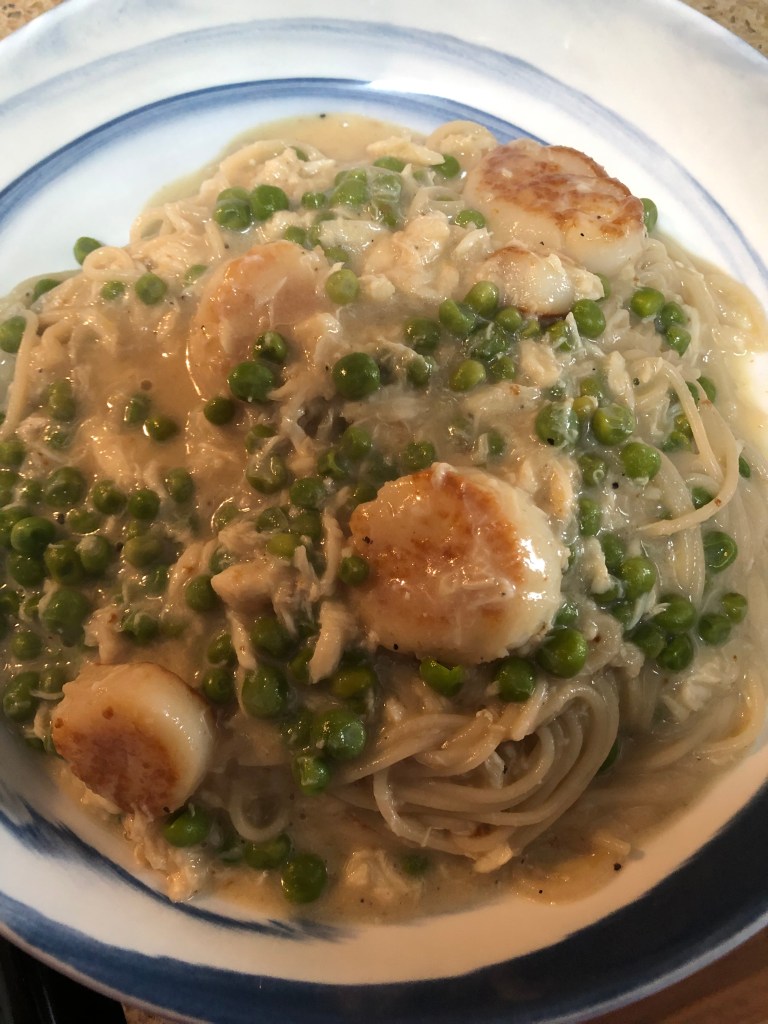
Seafood Capellini with Lemon Sauce

Bought some beautiful scallops the other day and wondered what I could do with them. I also had a jar of crabmeat in the refrigerator and since I’ve been carving some seafood pasta, I decided to try something a little different. Generally, one can’t mix lemon juice with dairy since it curdles the milk. However, we don’t use dairy milk but plant-based milks so that doesn’t apply here. Basically, I made a white sauce with oat milk, grated in the rind of one lemon and stirred in the lemon juice, added the seafood and voila! Feel free to use whatever pasta and seafood your family enjoys.

First, put on a pot of water to boil for the pasta. Cook pasta according to box instructions. Also in a small pot, boil (or steam):

1 cup frozen green peas

Next, in a medium saute pan, heat over medium high:

1/4 cup olive oil

When the oil is very hot add:

8-10 sea scallops (dried thoroughly)

Reduce heat to medium and saute on each side for approximately 1-2 minutes depending on the thickness of the scallops. Remove from the heat, reduce heat to medium low and stir in:

1/4 to 1/3 cup gluten-free all-purpose flour

Stir to combine the two, the flour should absorb all the oil. Stir while it cooks for 1-2 minutes. Add:

Grated rind of one lemon

Juice of 1 lemon

1 1/2 cups non-dairy milk (NOT soy)

Salt and pepper to taste

Whisk to combine and continue whisking over low medium heat until the mixture thickens. Stir in the seared scallops and whatever other seafood your family likes. Add cooked pasta and strained peas. Serve immediately.

Air Frier Turkey Tenderloins

With all my food allergies, protein is difficult sometimes. And since I live alone, most meats except for individual things like pork chops or chicken pieces are always too much for one meal. So when I find turkey tenderloins, I always buy several packages and freeze the tenderloins individually. And then look for new and different ways to cook them. If you have an air fryer, this is so easy and quick. Otherwise, it could be cooked in the oven but it’ll just take a little longer. Of course, the essential thing about tenderloins, whatever type of animal they come from is not overcooking them and drying them out. This air fryer method worked very well for that. And, of course, this rub works on any protein, not just animal. And try mixing it up with different herbs and spices.

Preheat air fryer at 400 degrees for about 5 minutes.

Spray the air fryer basket with non-stick spray.

In a small bowl, combine:

1 teaspoon paprika

1 teaspoon garlic granules (or powder)

1/2 teaspoon dried thyme

1/2 teaspoon sea salt

1/4 teaspoon ground black pepper

1 teaspoon dried sage

1/2 teaspoon onion powder

Using paper towels, dry:

2 turkey tenderloins

Once dry, rub with:

1-2 tablespoons olive oil

Then sprinkle the rub mixture over the tenderloins being sure to coat both sides. Using dry hands, rub the herb mixture into the tenderloins. Place in the air fryer basket and cook for 12-15 minutes. Turn and repeat. Check turkey temperature (should be at 165 degrees) before removing. Let rest about 5 minutes before slicing.

Herbed Baked Chicken Breasts

This is a tasty, easy and quick recipe. Feel free to change up the herbs you use so that you get the flavors your family prefers. I like thyme and marjoram so those are the two I used but the paprika and garlic powder are staples for this recipe. It only takes a couple of minutes to get the herb rub together and cut the breasts in half (lengthwise) so total, this recipe takes less than a half hour before ready to eat.

First, preheat oven to 425 degrees. Line a baking sheet with parchment paper. Dry off:

2 chicken breasts, about 6-8 ounces each

Using a long knife, hold a breast upright against the palm of your hand and cut in half to produce two approximately equal portions of chicken breast. Repeat with the second breast. Next place the breasts on the prepared baking sheet and sprinkle with:

1-2 tablespoons olive oil.

Rub to coat the breast pieces evenly. Wash your hands. Next, in a small bowl combine:

1 teaspoon paprika

1 teaspoon dried thyme

1/2 teaspoon dried marjoram

1/2 teaspoon garlic powder

1 tablespoon date sugar (or coconut sugar)

3/4 teaspoon sea salt

1/2 teaspoon ground black pepper

Sprinkle the herb mix on one breast at a time and rub to coat. Repeat until all pieces are covered on both sides. I sprinkled all the breasts at once so by the time I got to the third one, the herb rub was a paste instead of dry. That’s why I suggest you sprinkle the rub on one piece at a time! Bake for 15-20 minutes, or until internal temperature reaches 165 degrees. The time needed will depend on the thickness of the breast pieces. My pieces were about a 1/2″ thick and took around 16 minutes. Don’t overcook or the breasts will be dry. Be sure to let the meat rest for about 5 minutes before cutting. Serves two generously.

Asian Glazed Sea Bass with Bok Choy

My favorite fish is Chilian sea bass. I don’t have it often obviously because it’s also about the most expensive fish. But it was on sale this week so I had to buy some and of course, then I had to find a new way to cook it. I’d also bought some Bok choy so this recipe popped out at me when I did a search. Hope you enjoy it as much as I did. It’s pretty quick and easy, just be careful making the glaze since it should be brushable, not gloppy.

First, preheat oven to 400 degrees. Line a baking sheet with parchment paper. Next, clean:

4-6 baby Bok choy (remove ends, wash thoroughly and dry)

Place the Bok choy on the baking sheet. Heat over medium high heat in a 10″ oven-safe skillet:

1 tablespoon olive oil

When the oil is shimmering add:

2 sea bass fillets, about 6 ounces each (be sure to scale the fish, wash and dry the fillets, remove the bones if desired)

Sear in the oil for about 6-8 minutes until skin easily separates from the pan. Flip over to flesh side and place in the oven for approximately 12-15 minutes until almost cooked (flesh flakes easily when cooked). Sprinkle the Bok choy pieces with:

2 tablespoons olive oil

1/2 teaspoon sea salt

1/4 teaspoon ground black pepper

Add to the oven and roast for about 15-18 minutes. While the bass and Bok choy cook, make the glaze. In a small saucepan add:

1/2 cup soy sauce substitute

1 tablespoon rice vinegar

2 tablespoons honey (or maple, agave or date syrup)

1/2 teaspoon sea salt

1 tablespoon sesame seeds

1/2 tablespoon arrowroot mixed with 1 tablespoon water (a slurry)

Cook until just thickened. Don’t overcook! Set aside until the fish is just about cooked. Remove the fish and Bok choy from the oven. Brush each with a generous amount of the glaze and return to the oven for another 3-4 minutes. Serve immediately. Garnish with the greens from the scallions.

TIP: I had some glaze left over and the next day cooked some green beans (saute in a little olive oil until tender). When thy were cooked, I poured over the 1/4 cup of remaining gaze. Oh succulent and full of umami!